
All opinions expressed in Paul's blogs are solely his own. They do not represent the opinions of his employers and/or associates.

"Bad and Better"
To borrow a quote from a 2016 op-ed by Dennis Prager, “I cannot imagine any thinking person who does not believe the world is getting worse.”…I suspect the quote above resonates with you, at least on some level. I mean to suggest that an anxiety disorder is similar to that Prager quote, but often on a smaller scale. I by no means have an antidote for this problem, but I feel there are two important steps we can take: having (and spreading) more accurate information about the world and being more open with our own struggles, so those facing the same challenges won’t feel so alone or defective.

Combating Anxiety in Teaching and Beyond
What if I fail? What if I’m not good enough? – What if I’m not alone?
Again, I have been away from this blog for a long time, but it has been a challenging year. The idea that the first year of teaching is difficult is self-evident and obvious to anyone in the profession. For those outside the profession, I will try to contextualize the challenge: it is like taking a new job, where the bosses have new expectations you may not be used to, you’re in charge of supervising 120 or more employees who often have poor self-control and executive functioning skills, you need to create most of the work you do each day from scratch, you need to assess every employee’s performance on a weekly basis, and then a major part of your performance evaluation depends on government-mandated tests that don’t accurately measure the entirety of what your employees know and can do. All of this means your job is certain to bleed into your nights and weekends, so you will never feel “done” for the day. Add to that that you may have moved away from your hometown, where you were born and where you’ve lived for the last 28 years, as was the case for me. And, yes, you get some time off during the summer, but that’s not a huge comfort when you’ve worked an average of 50-60 hour weeks for nine and a half months and when you need to spend a chunk of the summer preparing for the upcoming year.
Even that description feels overwhelming. To put it more succinctly, I’ll borrow a quote that is often misattributed to Mark Twain: “Describing her first day back in grade school after a long absence, a teacher said it was like trying to hold 35 corks under water at the same time.”
But, while I mean to chronicle some of my challenges, the purpose of this blog post isn’t to complain. For most of my audience, I am assuming the idea that teaching is hard, particularly in the first year, is a given. Instead, I want to talk about the part of my experience that is unusual, or, more specifically, to make it seem less unusual.
I want to talk about my first year through the two lenses: my bipolar II disorder and two books I’ve recently read. Those books were Factufulness: Ten Reasons We’re Wrong about the World by Hans Rosling and The Better Angles of Our Nature: Why Violence has Declined by Steven Pinker. While I wouldn’t say my disorder needs much of a counterweight these days, it still added different, personal context to these books that gave them new significance. Even without an anxiety disorder, our constant and effortless access to events all across the globe can reasonably lead us to see a world full of violence, indifference, cruelty, suffering, and zealotry. In other words, to borrow a quote from a 2016 op-ed by Dennis Prager, published on Townhall.com, “I cannot imagine any thinking person who does not believe the world is getting worse.” The rest of Prager’s argument and sentiment may not be widely shared, but I suspect the quote above resonates with you, at least on some level. I mean to suggest that an anxiety disorder is similar to that Prager quote, but often on a smaller scale. I by no means have an antidote for this problem, but I feel there are two important steps we can take: having (and spreading) more accurate information about the world and being more open with our own struggles, so those facing the same challenges won’t feel so alone or defective.
Before we discuss those two books, I’ll offer a brief explanation of my bipolar II disorder – at least as I have understood it in my own life and experiences. First, bipolar II doesn’t have a lot in common with the more conventional bipolar I. It still features depressive episodes, but the manic episodes manifest more as anxiety, rather than increased energy and self-confidence (which are the nicer, milder sides of bipolar I manic episodes). Bipolar II also does not operate on the sort of predictable cycles that bipolar I does. But let’s set all of those nuanced distinctions aside. For pretty much all intents and purposes, I have an anxiety disorder. These days, my bouts of depression are rare and mild. My anxiety is what made the challenges of my first year more unusual, but I am writing this blog post because I suspect it’s not as unusual as it may seem. Mental disorders are not easily or frequently discussed, and they are often misunderstood.
For my readers who don’t have an anxiety disorder or do not have a close relationship with someone who does, I will do my best to explain it. It is not just a matter of “worrying” about something. I imagine everyone reading this can picture a time in which you were really nervous or stressed about something. Maybe it was an upcoming job interview, or a presentation, or a date with someone new. Maybe you can picture how it made you feel tense. Maybe it made your muscles tight, or made you sweat. And, perhaps most significantly, it might have made your mind race with “what ifs,” making it hard to stop imagining worst-case scenarios.
An anxiety disorder is like that feeling, but one that never stops and often doesn’t have a clear event or cause attached to it, so it is hard to stop the cycle. Anxiety can make it so you never feel good enough: never prepared enough, never confident enough, never capable enough. In some people, it creates overwhelming perfectionism (something I occasionally experience). All of those feelings aren’t rooted in evidence or reason; they are rooted in “what ifs” and imagined worst case scenarios. An anxiety disorder is fundamentally irrational. I like to think of myself as a logical, thoughtful person, so I can reason through how my anxiety makes no sense, but that does nothing to stop it from coming and possibly consuming me.
One of the best and worst parts of teaching is that every day is different. Moreover, every period – even if it’s the same content – is different. That keeps things from getting too boring or monotonous, but it also creates tremendous fuel for anxiety. Unpredictability creates so much more room for new and different “what if” worries. On top of that, in the words of one of my former principals: “every day in your first year is a first: your first tenth day, your first forty-second day, and so on.” Ask any teacher what it is like to teach during December or May, and they will confirm that every new day can bring new challenges.
However, I want to reiterate that the intent of this post is not to complain. While each day brings new challenges, it can also bring new (and often unexpected) rewards. Early in my first semester, I mentioned off-hand that I have an anxiety disorder. It was really only for the purpose of modeling a topic I might write about in a narrative. I have made it a point in the past to be comfortable mentioning my anxiety disorder around my students in hopes of normalizing it, but I didn’t think much of this particular mention at the time.
Without disclosing too many details, I had a student come to me a month or two later, in the middle of one of my classes, and ask to talk to me in the hall. He was clearly distraught and told me he was struggling with an anxiety disorder that had manifested only recently and was not yet well-managed. I talked with him a bit about what works for me, including giving him a notecard I kept with me that had questions aimed at de-escalating a panic attack. I by no means fixed the hardship he was grappling with, but I hope I helped him feel less alone and less dysfunctional. By the end, he asked for a hug and went on his way. When I say teaching can be rewarding, moments like these are what I think of.
But isn’t this only temporary or hollow comfort if the world is getting worse? Aren’t both that student and I bound to face an evermore challenging and grim world? My automatic instinct, which I suspect is shared by many other people, is that of course the world is getting worse. I read the newspaper every day, and there is no shortage of things to worry about. I wonder, though, if this instinct to that leads us to believe the world is only getting worse is something akin to macrocosmic anxiety. It is difficult for me to talk myself down from my own anxiety, and it often requires some kind of evidence I can point to as a counterargument to that anxiety. For example, in worrying about whether I’m good enough to endure my second year of teaching, I can look back at my first year and tell myself that if I survived that year, so I can survive this one, too. Does that mean evidence that the world is not such a terrible place can help reduce the macrocosmic anxiety? I’d like to think so.

That brings us back to what I’ve been reading. Factfulness by Hans Rosling, and the related Gapminder Foundation maintained by his family, is aimed at demonstrating how the world has improved on virtually every front and examining why it doesn’t feel that way. In Rosling’s research and presentations, he found that when people were asked questions about the various problems that face the world, the vast majority of people overwhelmingly selected the grimmest option. Those answers are factually incorrect, and even knowledgeable people from various industries performed worse than a random 1 out of 3 chance. He calls this an “overdramatic worldview,” and it is one decidedly at odds with the statistical reality of our world today. Crucially, Rosling cautions us against overblown optimism that might lead to complacency. Instead, he describes the world as “bad and better”: many terrible problems still exist and must be confronted, but work in virtually every field and industry will be less effective if we don’t have an accurate picture of the world as it really is. Still, he reminds us that “step-by-step, year-by-year, the world is improving. Not by every single measure every single year, but as a rule.” That rule is easy to lose sight of – and, in fact, Rosling spent much of his career demonstrating exactly that – even without an anxiety disorder. However, a grim worldview is all the more compelling and seemingly self-evident through the distorted lens of an anxiety disorder. Anxiety is fundamentally illogical and is rooted in imagined worse case scenarios, but extensive data and persuasive arguments can chip away at that distorting lens.

Meanwhile, Better Angels of Our Nature by Steven Pinker takes a narrower, but much deeper, look at how the world has improved. In his extensive book, Pinker examines how violence of every type has statistically decreased over the course of human history and that “today we may be living in the most peaceable era in our species’ existence.” While that sentence alone, if true, is comforting, Pinker cautions that this shift “has not been smooth; it has not brought violence down to zero; and it is not guaranteed to continue.” This is not unlike Rosling’s description of the world as “bad and better.” This statistical decline should not lull us into complacency, particularly when many of the causes Pinker points to (the “civilizing process” of social norms, international cooperation, empathy towards others, etc.) seem to be losing popularity in the public discourses of the United States and beyond. However, this book, like Factfulness, can be evidence against a worldview filtered through the lens of anxiety. If other people are like me and require evidence to diffuse the chain of “what ifs,” then these books may be of particular value. If nothing else, it has been enlightening, comforting, and all the more fascinating to read these as someone who tries to base his beliefs on evidence and as someone who tries to combat his fundamentally irrational anxiety disorder with contrary evidence.
None of what I’ve said above is a recipe for fixing our society’s macrocosmic anxiety or the microcosmic manifestations that are the anxiety disorders affecting myself and some of my students. However, I think a path forward in this arena is simpler than it may seem. Sharing with my students that I have an anxiety disorder was largely an accident the first time, but it has been a purposeful choice ever since I saw how it helped one of my students. Not everyone has an anxiety disorder, thankfully, but we all have struggles and challenges. I don’t mean to suggest we bare every wound and every hurt in the middle of our classrooms, but instead only to tell our students that they are not alone in their pain and their difficulties. I hope to see us bare what we can manage, and what is appropriate to our circumstances, in an effort to foster more empathy and break down barriers of loneliness. Of course, if we stack our individual struggles next to one another, they may not be objectively equal, but that sort of comparison is not a path to empathy. In the words of Ash Beckham, “Hard is not relative. Hard is hard….There is no harder, there is just hard.” It is important that our students know they are not the only ones struggling to deal with something hard. All the better if they can know that they are not the only ones dealing with a specific challenge or disorder.
While they are by no means the only challenge our students face, mental health disorders still live largely in the shadows of social and self-imposed stigmas. One major factor is that they are labeled as “disorders,” admittedly even in this very blog post. They are atypical, often not readily understood by people who haven’t experienced it, and many can be difficult to precisely diagnose and treat. Adolescents may be particularly prone to this stigma, according to research conducted by T. Moses. In Moses’ research, nearly half felt stigmatized by family members, including forms such as “unwarranted assumptions, distrust, avoidance, pity, and gossip.” More relevant to us, as teachers, more than a third reported feeling stigmatized by their teachers, perceiving the teachers expressed “fear, dislike, avoidance, and under-estimation of their abilities.” Even those out there who have no mental disorders can still help reduce the stigma by bringing their own challenges out of the shadows, to whatever degree she or he is comfortable. Contrary evidence to the easily internalized grim view of the world will be most effective in reshaping people’s worldviews, on the large and small scales, only after the “what ifs” of anxiety have been defused.
There is no cure-all or quick fix, but greater honesty about what is hard in our own lives can be a meaningful and relatively simple step forward.
Works Cited
Beckham, Ash. “We’re All Hiding Something. Let’s Find the Courage to Open Up.” TED.com, September 2013. https://www.ted.com/talks/ash_beckham_we_re_all_hiding_something_let_s_find_the_courage_to_open_up. Accessed 26 December 2018.
El-Mallakh, Rif, Richard H. Weisler, Mark H. Townsend, and Lawrence D. Ginsberg. “Bipolar II Disorder: Current and Future Treatment Options.” Annals of Clinical Psychology, 18, 4, 2006, pp. 259-266. doi: http://dx.doi.org/10.1080/10401230600948480 Accessed 30 December 2018.
Fletcher, Jenna. “What’s to Know About Bipolar II Disorder?” Medicalnewstoday, 7 September 2017. Edited by Timothy J. Legg. https://www.medicalnewstoday.com/articles/319280.php. Accessed 26 December 2018.
Gapminder: Unveiling the Beauty of Statistic for a Fact-Based World View. Gapminder Institute, March 2018. https://www.gapminder.org. Accessed 26 December 2018.
Moses, T. “Being Treated Differently: Stigma Experiences with Family, Peers, and School Staff among Adolescents with Mental Health Disorders.” Social Science and Medicine, vol. 70, no. 7, 2010, pp. 985-993, doi: 10.1016/j.socscimed.2009.12.022. Accessed 27 December 2018.
Prager, Dennis. “The World is Getting Worse, but This Time America Won’t Save It.” Townhall, 8 March 2016. https://townhall.com/columnists/dennisprager/2016/03/08/the-world-is-getting-worse-but-this-time-america-wont-save-it-n2130079. Accessed 26 December 2018.

A Defense of Public Schools
I strongly believe we should focus our investment, financially and otherwise, on supporting and reforming traditional public schools when needed. DeVos, if confirmed, threatens the survival of traditional public schools, but she is far from the only threat. A national obsession with charter schools, while not always misguided, is a more immediate and long-lived challenge. Both issues must be confronted in the defense of public schools.
Countering Charters, Vouchers, and Betsy DeVos
Note: At times I will refer to “public schools” in contrast to “charter schools.” This is solely for clarity and ease in this conversation. It is important to note that charter schools are public schools; they just operate differently than traditional public schools.

Betsy DaVos confirmation hearing (Source: CSPAN)
This past week, there was a congressional confirmation hearing for the new president’s Secretary of Education nominee, Betsy DeVos (provided in its entirety below). DeVos is a staunch – and influential – advocate for school voucher programs. Voucher programs involve providing public tax dollars to parents for attending a wide variety of schools, often including private and religious schools. DeVos has also been a strong supporter of charter schools. Those two efforts combined, and particularly voucher programs, would gut traditional public schools, though (very crucially) not abolish them completely. There will be students who will never have any other choice than their neighborhood schools; the ability to attend private or charter schools often depends on very simple privileges, such as parents who can drive their kids to school every day. Leaving underprivileged kids at schools that are bled all but dry of their funding does a disservice to us all. Our society and our democracy are best served by a well-educated populace. Moreover, our children benefit from being around people who are unlike them, in privilege, identity, heritage, and ability. I strongly believe we should focus our investment, financially and otherwise, on supporting traditional public schools and reforming them as needed. DeVos, if confirmed, threatens the survival of traditional public schools, but she is far from the only threat. A national obsession with charter schools, while not always misguided, is a more immediate and long-lived challenge. Both issues must be confronted in the defense of public schools.
Recently over lunch, I was talking to one of my colleagues about a local charter school. She had some favorable things to say about that charter school. Among them was that the students at that school “actually want to be there.” I can imagine that she was right, and there is definitely something appealing about that as a teacher. I’ve had plenty of students who didn’t want to be in my class, or in school at all, and that is difficult to work with. But that conflict is one of the most important parts of the mission of public education. We will all pay a price, sometimes literally, for not giving every child a quality education. DeVos and others would argue that charter schools or voucher programs are the best path to quality. I argue that the more scattered our school population becomes, and the more power becomes concentrated in exclusionary schools, the further we move away from a model that will work for every child. That isn’t to say problems don’t exist in our current public schools and public school system. Many problems exist, and various kinds of reform will be needed to ensure their quality and survival.
Enter: outsiders with ideas on how to ensure quality education for everyone. There are a many proposed solutions, with varying price tags attached (sometimes more literally than others). Outsiders are often favored for varying reasons, including the belief that reform needs to come from outside of the system. When looking to reform public schools, the outsiders of choice usually come from the business world. And so we have Betsy DeVos, with control of the Department of Education nearly in hand. DeVos’ status as an outsider is nothing shocking in education administration: we are a field governed by non-experts. Nor is it shocking that DeVos has no teaching experience, no formal training related to the field, and did not send her kids to public schools. Particularly when picked by Donald Trump, that seems to be par for the course.
Unsurprising as it may be, DeVos’ lack of knowledge on the subject is troubling, and may have very serious consequences if she is confirmed. Her lack of qualification is not my main focus in this post, but it speaks to the issue of having non-experts (from the business world or otherwise) govern education. Two particular points on which she seems to lack knowledge are relevant to what follows: her confusion in regards to the Individuals with Disabilities Education Act (IDEA) and on the difference between “growth” and “proficiency” in assessment.
IDEA is a federal law passed during Nixon’s time in office that requires schools receiving federal money to offer equal access to students with disabilities (physical, cognitive, or emotional). DeVos’ answer was that this sort of requirement should be decided at the state level, showing a lack of awareness that it is an existing federal law which her department would be in charge of enforcing. Although the law isn’t new, constant effort is needed to ensure its requirement are met – all the more so if private schools are going to start receiving public federal money.
In assessment, “growth” measures the progress a student makes in a particular area, where “proficiency” measures them against a specific benchmark. To illustrate the difference, assessing whether a student can read at a 9th grade level is assessing his proficiency. Looking at a students’ reading level at the end of the year relative to where she started (say, beginning 9th grade with a 4th grade level and ending at a 7th grade reading level) is assessing her growth. At a glance, “growth” versus “proficiency” may seem like a semantic debate over two jargon words for the same concept – and in fact, that seems to be what DeVos thought it was – but in practice, they are significantly different. That distinction is crucial when it comes to using standardized assessment to determine federal school funding.
These two points are salient, because they show a lack of understanding about two factors that are explicitly related to her (potential) future Department, and because they illustrate the kind of issues that can arise when someone with only a general familiarity with a field is assigned to run it. DeVos is problematically unqualified, and her nomination is another play in a long-running effort to reform schools from the outside, often with business-people, or at least business-management ideals, leading the charge. In these discussions, teachers are often not treated as competent, let alone trustworthy, professionals. They are instead viewed as the key problem in education: a colony of potentially beneficial bacteria that, if not managed by an outside authority, will rot the host. This treatment isn’t alien to all other fields, but few or none are distrusted to the degree that teachers are. When proof is needed for why teachers aren’t trustworthy, a number of bad teachers can be trotted out. Even in your own life, you can probably think of a couple truly terrible teachers. I certainly can. Instead, individuals or companies from the business world are brought in to set teachers straight and reform the profession. I can’t imagine this would be tolerated in any other field, but in education it has been accepted enough that business leaders are given increasingly larger slices of our system.
I’m an English teacher, so I am drawn to metaphors. Perhaps what follows won’t qualify as a good one, but I hope you’ll indulge me. Imagine that you are a civil engineer, and you are an expert in building bridges for busy roads. In a year, hundreds of people drive over these bridges, with a wide range of vehicles. You need to build a bridge that can support all of those vehicles and all of that wear. If you fail and someone gets hurt, it won’t just affect that one person: it will affect the many people she knows and those who depend on her.

A less-than stable bridge (Source)
Now, building bridges like this is important work, and we all have a stake in whether the bridge collapses or not. So, I, an English teacher, come in to make sure the construction is done right. I have never built a bridge, and I have no education in this field. However, a team of bridge builders is kind of like a classroom: they both involve managing people and working towards a specific goal. What’s more, I’ve driven over a lot of bridges in my time. I tell you, the engineer, how best to build this bridge. If you don’t listen to me, you may lose your job. If your workers’ union tries to oppose me, I’ll talk to my friends and see if we can diminish the power of that union.
People wouldn’t tolerate what I’ve described above. It’s silly, and there could be serious, far-reaching, and expensive consequences if I got it wrong. It could work, but I wouldn’t bet on it. However, this is (an exaggerated version of) what teachers deal with. We are already a field run by non-experts. And there are some out there who think the non-experts have too little influence. Or, in the words or Senator Joseph Lieberman introducing DeVos, that being a non-expert is “the most important qualifications you could have” for education administration.
While DeVos represents this problem, she is far from the only billionaire exerting control over the field. The Common Core State Standards (CCSS), like any system of standardization, has both good and bad aspects, but it is also hard to ignore the role corporations had in their creation. The research that argued the CCSS were needed was funded in no small part by Microsoft and Walmart. Then those same organizations funded the development of the CCSS. That, in itself, isn’t a bad thing, but it speaks to the power corporations have over our education system, when they can argue that their system is necessary, design that system, and see it adopted in the majority of states – including setting high stakes for teacher effectiveness as measured by these standards. In other words, those corporations get to tell us there's a problem, create its solution, and ensure that teachers are held accountable to their created solution.
The importance of K-12 teaching experience is precisely why teacher education programs require student teaching. Our university education offers invaluable insight, theories, and practica, but many of those are challenged by, or even broken by, the day-to-day demands, issues, and limitations of public school education. This disconnect is even greater when it comes to people with no experience in the field (other than, perhaps, attending or observing a public school). Managerial maxims may sound useful, but they rarely account for the issues public schools face. As mentioned in my previous post, those issues can be best summed up by saying public schools must consume every imaginable social issue in hopes developing a cure. Few CEOs have to worry about whether the people in their building were homeless last night, or if their parents recently tried to murder them, or if they have an unidentified need that makes their work far more difficult than it is for any of their peers. Those are all issues I have encountered in less than a year.
I do not mean to frame this as an either-or issue, or to cast businesses as villains. There are a lot of good things businesses have to offer the education world, ranging from new ideas to financial support. A partnership between public schools and businesses can be incredibly valuable. But a partnership is very different from one administrating the other. In my more cynical moments, I feel that businesses mean the business-education partnership to be primarily one-way: directing schools and teachers how to better serve businesses’ interests. Far less common is the idea that schools and teachers should inform the practices of the business or political world. Yet schools still reap the consequences of business and political decisions and are left to pick up the pieces.
In Why School?: Reclaiming Education for All of Us, UCLA professor Mike Rose argues that:
“A further, larger, issue is this: in all the public discussions I’ve heard, the focus of school-business alliances is solely on the problems with the schools and what businesses can do to remedy those problems. The discussion never seems to include businesses’ contributions to the conditions that have limited educational achievement” (77).
As for those “conditions that have limited achievement,” Rose is more specific on the following page, describing “an ongoing, damaging trend in American business that pushes short-term interests over long-term prosperity and the social good” (78). A look at the new president and his cabinet validate Rose’s words.
Charter schools are, indeed, public schools, but they have more freedom in how they operate and are often founded and/or run by people from the business world. In some cases, they are even run as for-profit entities or by for-profit management companies. That is distinctly different from traditional public schools, and, according to Mike Rose, “there is a danger of the profit motive trumping educational goals” (76). The greater freedom charter schools are given can cut both ways. In short, charter schools lessen regulations and give those schools greater freedom. Depending on who is at the helm of those schools, that could be valuable and produce excellent results. However, if this greater freedom and authority is handed over to unqualified or misguided authorities, it can be ineffective or even harmful.
But even the schools that produce excellent results can deny access to, or expel and suspend, a far greater number of students than public schools can. So, while charter schools are public schools in some regards, there are meaningful differences when it comes to educating our entire population. As highlighted in an article from The Atlantic, some charter schools (including, perhaps tellingly, ones with high test scores and general performance) suspend, expel, and refuse entry to students with disabilities and students of color at a higher rate than their public school peers. The authors of that article “express concern that some charter schools are dissuading children with disabilities from enrolling, which may contribute to the high marks some zero-tolerance schools report.” Moreover, increased school of choice results in greater segregation in race and socio-economic status. Having a choice of schools depends upon also have certain degrees of privilege.
Traditional public schools have an obligation to provide access and education to all of the students within their boundaries. That creates many challenges, class size not the least among them. As with charter schools where the kids “actually want to be there,” I can understand the appeal of refusing entry or not educating everyone, but that is a terrible, selfish vice that I must be aware of and fight against. Education isn’t about making my life easier, and our schools shouldn’t be shaped by such a selfish desire. As an early career teacher, I certainly have my share of struggles in maintaining a safe, equitable, and rigorous environment in my classroom. It is, frankly, very difficult to educate every student and confront their wide variety of challenges. However, that work being so difficult, and the challenges being so numerous and diverse, is precisely why we need to do it. If educating the most difficult students feels like a Herculean – or even Sisyphean – task for knowledgeable, highly trained professionals, then those students would likely have little chance of receiving a quality education elsewhere.
I can’t imagine anyone truly thinking that our public school system needs no reform. There are many issues, both with individual schools and the system as a whole. However, we are not faced with the false choice of leaving the system as it is or effectively abandoning it in favor of charter schools, private schools, and vouchers. There are reasonable compromises between this false dichotomy. Like school-business partnerships, there are undeniably good things that private schools and charter schools have to offer, but that does not erase their flaws. I would much rather see their ideas be used to inform public school reform rather than draining public schools’ funding and diminishing the traditional public school model as a whole. Thinking that public schools can be reformed by giving their funding to private schools, and more to charter schools than we already do, is like thinking that you can rebuild a house by walking off with most of its pieces.

Thomas Jefferson
I am a firm believer in the mission of public education, but as with charter schools, its virtues do not negate the current system’s flaws. If we mean to keep public education – and we should; there is no reasonable alternative – then it is in our best interest to reform our system, borrowing the methods that work while still striving to ensure universal access. Universal education, at least in accordance with Founding Fathers’ perspective on “universal” at the time, is an ideal that stretches back to the beginnings of education in the United States. To quote Thomas Jefferson, “If a nation expects to be ignorant & free, in a state of civilisation, it expects what never was & never will be….Where the press is free and every man able to read, all is safe.” Or, as it is often paraphrased, “An educated citizenry is a vital requisite for our survival as a free people.”
We have stumbled in this pursuit, and failures have caused measurable harm, but the answer is to fight for reforms, not to abandon ship into a sea of charter and private schools. The single biggest challenge, and the single greatest value, of public education is the need to try to save everyone. The fight is daunting, and there are many improvements needed, but there is no worthier cause. The fight will always be a long-term one, but the short term is made more precarious as individuals like DeVos stand on the brink of controlling the machinery of our public education system. It falls to us, as teachers and as citizens, to defend it.
Works Consulted
Bill and Melinda Gates Foundation. “Smart Options: Investing the Recovery Funds for Student Success.” Gatesfoundation.org, 9 April 2009, https://docs.gatesfoundation.org/Documents/investing-the-recovery-funds-for-student-success.pdf. Accessed 21 Jan 2017
Brown, Emma. “Trump Picks Billionaire Betsy DeVos, School Voucher Advocate, as Education Secretary.” Washington Post, 23 Nov 2016, https://www.washingtonpost.com/local/education/trump-picks-billionaire-betsy-devos-school-voucher-advocate-as-education-secretary/2016/11/23/c3d66b94-af96-11e6-840f-e3ebab6bcdd3_story.html?utm_term=.f241d4484aee. Accessed 21 Jan 2017
Deruy, Emily. “Unequal Discipline at Charter Schools.” The Atlantic, 18 Mar 2016, https://www.theatlantic.com/education/archive/2016/03/unequal-discipline-at-charter-schools/474459/. Accessed 21 Jan 2017
Glatter, Hayley. “Can School Choice Work in Rural Areas?” The Atlantic, 19 Jan 2017, https://www.theatlantic.com/education/archive/2017/01/can-school-choice-work-in-rural-areas/513584/. Accessed 21 Jan 2017
National Conference of State Legislators. “School Vouchers.” ncsl.org, 20 June 2013, http://www.ncsl.org/research/education/school-choice-vouchers.aspx. Accessed 21 Jan 2017
Nelson, Libby. “Betsy DeVos was Asked a Basic Question about Education – and Couldn’t Answer.” Vox.com, 17 Jan 2017, http://www.vox.com/2017/1/17/14304692/devos-confirmation-hearing-education. Accessed 21 Jan 2017
Rose, Mike. Why School?: Reclaiming Education for All of Us. The New Press, 2014.
Strauss, Valerie. “Betsy DeVos Apparently ‘Confused’ about Federal Law Protecting Students with Disabilities.” Washington Post, 17 Jan 2017, https://www.washingtonpost.com/news/answer-sheet/wp/2017/01/17/betsy-devos-confused-about-federal-law-protecting-students-with-disabilities/?utm_term=.12b237a390f5. Accessed 21 Jan 2017
Sum, Andrew, Ishwar Khatiwada, Joseph McLaughlin, and Sheila Palma. “The Consequences of Dropping Out of High School: Joblessness and Jailing for High School Dropouts and the High Cost for Taxpayers.” Center for Labor Market Studies. Boston, Massachusetts: Northeastern University, Oct 2009, https://www.prisonpolicy.org/scans/The_Consequences_of_Dropping_Out_of_High_School.pdf
Swasey, Christel. “David Coleman: Dropping All Things Beautiful from American Schools.” Common Core: Education Without Representation, 17 Dec 2012, https://whatiscommoncore.wordpress.com/2012/12/17/4484/. Accessed 21 Jan 2017

Facing Fake News
The internet has always given voice to every imaginable belief, and allowed people to connect to a community of like-minded people. I feel that does more good than evil, on average, but the potential harm cannot be ignored, particularly when our national discourse actively privileges conspiracy theories, disrespect for intelligence professionals, and a disinterest in (or even hostility towards) notions of the “truth” as something other than personal desire or ideology.
Pizzas, Presidents, and Post-Truth

Oxford English Dictionary has declared “post-truth” their word of the year. OED defines post-truth as an adjective meaning “relating to or denoting circumstances in which objective facts are less influential in shaping public opinion than appeals to emotion and personal belief.” The choice of “post-truth” is surely connected to the election of Donald Trump. I can’t help but wonder if it would have been chosen by the OED if Clinton had been elected. Still, I don’t believe “post-truth” is a word that only captures pessimism or bitterness. The word captures our current zeitgeist.
This trend of “post-truth” has consequences beyond who controls our government. The internet has always given voice to every imaginable belief, and allowed people to connect to a community of like-minded people. I feel that does more good than evil, on average, but the potential harm cannot be ignored, particularly when our national discourse actively privileges conspiracy theories, disrespect for intelligence professionals, and a disinterest in (or even hostility towards) notions of the “truth” as something other than personal desire or ideology.
As one example of the potential harm this combination can yield, on December 4th, Edgar Maddison Welch walked into a pizza place in Washington, D.C. with an assault rifle in hand, fired at least one shot (but, thankfully, did not injure or kill anyone), and proceeded to conduct an “investigation” of the pizza place for over an hour. All of this was motivated by a conspiracy theory, alleging that the pizza place was a hub of a secret child sex-trafficking ring, frequented by powerful Washington figures, including Barack Obama and the Clinton family.
The evidence to support this conspiracy theory is circuitous and requires some major leaps in reasoning, even for a conspiracy theory. But evidence isn’t what mattered. This wasn’t about objective facts. Instead, this conspiracy theory fit neatly into a web of anti-liberal conspiracy theories surrounding the Clintons and others. What mattered was existing personal beliefs and this conspiracy theory’s ability confirm pre-existing distrust of figures like the Clintons at a time when conspiracy theories against them were already consistently promoted by the future President of the United States.
This conspiracy theory is outlined well in this episode of the podcast Reply All. The first half was recorded before Welch’s attack on Comet Ping Pong pizzeria, and so it treats “Pizzagate” and just one more oddity born on the internet. However, the second half was recorded after the attack, and delves deeper into how these sorts of news stories spread.
A word of warning: even though the claims of Pizzagate are false, the topic is still disturbing, and this episode contains strong language.
Our post-truth era and attachment to our own confirmation bias has affected democracy itself, as hyperbolic as that sounds. A report released by the Office of the Director of National Intelligence – which collected the findings of the FBI, CIA, and NSA – claims that the Russian government worked to influence the most recent presidential election by hacking private information, actively spreading “fake news” and propaganda, and employing users of social media and internet “trolls” to serve their ends. The claim that one tactic Russia used was paying social media users and trolls to advocate against Clinton (or for Trump) has a whiff of conspiracy and “fake news” in itself. However, this is not implausible, and that is exactly the problem. The fact that a foreign government might have bankrolled social media users and trolls, and that the American people may have been fooled by it, makes it clear that, for many people, information on social media and similar websites have become the primary source of truth.
Gone are the days when newspapers and professional news organizations were (for the most part) trusted to report reliable facts. That role has now been shifted to users of Facebook and Twitter. It should not surprise us, then, that the president-elect believes he is not beholden to journalists, accuses organizations like CNN of being fake news, and receives at least some applause for it. He doesn’t need them; they didn’t bring him into power, and often even worked to prevent it – though usually only by accurately quoting Trump himself.
It would be comforting to think that the fake news epidemic is the result of some hostile external entity. But even when fake news has been created and circulated by foreign organizations, we can’t pretend there wasn’t an audience that was thirsty for it. Likewise, we can’t pretend that this was some novel invention of Russian propagandists. These articles were crafted following existing models. Titles like “How 100% of the Clintons’ ‘Charity’ Went to...Themselves” and “Julian Assange Special: Do WikiLeaks Have the E-mail That’ll Put Clinton in Prison?” (all created by the propaganda arm of Russia’s government) sound awfully familiar. We created this monster; others have merely followed our blueprints.
In my previous blog post, I argued that Trump’s election means teachers will have to shoulder a greater responsibility for upholding civility in our classrooms. The influence of fake news, and its privileged position within the president-elect’s rhetoric and cabinet, gives teachers another heightened responsibility: we must work to foster a stronger sense of skepticism and critical thinking in our schools and beyond.
I wish solving this problem was as simple as investing in education or redoubling our efforts. However, plenty of people who are uncritical to the point of being dangerous have been high school graduates – or even college graduates. Still, there is no better remedy, imperfect an antidote as education may be. Public education is the best single solution to our society’s problems, but that also requires consuming every one of those problems: like infecting oneself with a disease in hopes of developing a cure.
Fake news is now another problem added on top of the pile, and we are not likely to see its power shrink. The problem has deep roots. Our ability to insulate ourselves against information or evidence that we disagree with has dramatically expanded in the last decade. Social media allows us to live in echo chambers, with both our own biases and websites’ guiding algorithms creating feedback loops. Or, as Carl Sagan expressed in 1996, “Spurious accounts that snare the gullible are readily available. Skeptical treatments are much harder to find. Skepticism doesn’t sell well” (5). Consciously and unconsciously, we get to choose what our understanding of the truth is. We are entering a post-truth era.
This is an issue in which it is easy to point fingers at others. Admittedly, I have taken opportunities to do so in this blog post and beyond. However, even when there is valid cause for criticizing the actions of others, it must be accompanied by self-criticism as well. None of us are immune to the desire to uncritically embrace information that confirms our existing beliefs, thereby blunting our ability to examine whether that information is false. Moreover, as I have previously argued, smug certainty has a good bit to do with how we ended up with a Trump presidency, as well as a resentful population that helped bring him into power. One of the few ways to kill fake news and its ramifications is to consistently enact self-criticism, no matter how uncomfortable that becomes.
And when there comes a time that external criticism is merited, our society will be best served by finesse. To quote Carl Sagan yet again, when we criticize gullible or misled people:
"there is a tendency to belittle, to condescend, to ignore the fact that [these people] are human beings with real feelings who, like skeptics, are trying to figure out how the world works and what our role in it might be….If their culture has not given them all the tools they need to [think skeptically], let us temper our criticism with kindness. None of us comes fully equipped" (298).
Embracing the spirit of criticism tempered by kindness, and the knowledge that no one innately has the tools they need to be critical, skeptical citizens, we can look towards means of combating fake news, beginning with our schools. Thankfully, there is no shortage of lesson plans and materials already designed to address this issue. Sources ranging from NPR to PBS to The New York Times to Edutopia have free materials and articles for helping students identify and avoid fake news. These approaches must also be accompanied by critical self-reflection on the teacher’s part: we are nearly as susceptible to fake news as our students are. This is not an easy task, particularly when a symptom of our post-truth era is a distrust of educational institutions. However, the tasks that are difficult are often the most important ones to undertake.
Another crucial and challenging facet of using education to combat fake news is that for this method to work, students must have unfettered access to education, and as a society, we need to support our systems of public education. And there we have one more hurdle: public education is increasingly endangered, and will be more so in the hands of the incoming administration. But that is a conversation for another time.
Works Consulted
Dewey, Caitlin. “Facebook has Repeatedly Trended Fake News Since Firing its Human Editors.” The Washington Post, 12 Oct 2016, www.washingtonpost.com/news/the-intersect/wp/2016/10/12/facebook-has-repeatedly-trended-fake-news-since-firing-its-human-editors. Accessed 17 Jan 2017.
Ingram, Matthew. “Trump’s National Security Advisor Shared Fake News about Clinton.” Fortune.com, 19 Nov 2016, fortune.com/2016/11/19/trump-security-adviser-hoax. Accessed 17 Jan 2017.
Leef, George. “Higher Education has a Strong Leftist Bias – But Not Enough for One Prof.” forbes.com, 1 May 2014, www.forbes.com/sites/georgeleef/2014/05/01/higher-education-has-a-strong-leftist-bias-but-not-enough-for-one-prof. Accessed 17 Jan 2017.
Lopez, German. “A Man Fired Shots at a D.C. Pizzeria While ‘Investigating’ a Bizarre Fake News Conspiracy Theory.” Vox.com, 5 Dec 2016, www.vox.com/policy-and-politics/2016/12/5/13839178/comet-fake-news-pizzagate-gunman. Accessed 17 Jan 2017.
Lopez, German. “Pizzagate, the Fake News Conspiracy Theory that Led a Gunman to D.C.’s Comet Ping Pong, Explained.” Vox.com, 8 Dec 2016, www.vox.com/policy-and-politics/2016/12/5/13842258/pizzagate-comet-ping-pong-fake-news. Accessed 17 Jan 2017.
Miller, Joshua Rhett. “Critics Decry Obama’s ‘Indoctrination’ Plan for Students.” Fox News, 2 Sept 2009, www.foxnews.com/politics/2009/09/02/critics-decry-obamas-indoctrination-plan-students.html. Accessed 17 Jan 2017.
Miller, Zeke J. “Donald Trump has a Grand Unified Campaign Conspiracy Theory.” Time Magazine, 13 Oct 2016, time.com/4530568/donald-trump-hillary-clinton-conspiracy. Accessed 17 Jan 2017.
“Word of the Year 2016.” Oxford English Dictionary, 16 Nov 2016, en.oxforddictionaries.com/word-of-the-year/word-of-the-year-2016. Accessed 17 Jan 2017.
Professor Watchlist. Turning Point USA, 2016. www.professorwatchlist.org. Accessed 17 Jan 2017.
Sagan, Carl. The Demon-Haunted World: Science as a Candle in the Dark. New York: Ballantine Books, 1996.
Siddiqui, Sabrina. “Donald Trump Says CIA Charge Russia Influenced Election is ‘Ridiculous.’” The Guardian, 11 Dec 2016, www.theguardian.com/us-news/2016/dec/11/donald-trump-cia-russia-election-ridiculous. Accessed 17 Jan 2017.
The_Donald subreddit. www.reddit.com/r/The_Donald. Accessed 17 Jan 2017.
“Trump Shuts Down CNN Reporter.” CNN.com, 11 Jan 2017, www.cnn.com/videos/politics/2017/01/11/donald-trump-jim-acosta-cnn-fake-news.cnn. Accessed 17 Jan 2017.
United States, Office of the Director of National Intelligence. Background to “Assessing Russian Activities and Intentions in Recent US Elections”: The Analytic Process and Cyber Incident Attribution.” 6 Jan 2017, www.dni.gov/files/documents/ICA_2017_01.pdf. Accessed 17 Jan 2017.
“Voyage into Pizzagate.” Reply All from Gimlet Media, 8 Dec 2016, https://gimletmedia.com/episode/83-voyage-into-pizzagate

Waking Up in Donald Trump's America
Trump’s election shifts more responsibility onto each of us to build the sort of social discourse that will likely be challenged in the years to come....We must hold ourselves and others to a higher standard in our social discourse. We must strive to have even greater empathy, including for those we resent. We have a more exigent obligation to promote and enact social justice....Our future as a sane and functional society may well depend on our ability to enact decency in the face of dissolution.
Anxiety about the Future of Education and Social Discourse

Source: Slate.com
It is under unfortunate circumstances that I break my long radio silence, but writing is an invaluable tool for making sense of trying times.
While we, as educators, have an obligation to not be partisan in our classrooms, it is no secret that, as a private citizen, I have a strong dislike for – even fear of – Donald Trump. My wife is a woman of color. My mother-in-law is a Mexican immigrant and a legal resident, but not a citizen. I have friends and students who are members of the LGBTQ community. I know people whose lives have been significantly improved by having access to abortion services. It’s hard for me to not feel that all of those things are in danger now. Additionally, our social discourse will almost certainly be reshaped during Trump’s presidential term. The die is cast; there’s no going back now. So the question is: how do we move forward from here?
Before I move on, I need to own my privilege. I am a cisgendered, heterosexual, able-bodied, middle-class, white male. I fall into a group that is among those who have the least to fear from Trump. While I feel it is important to acknowledge that my rights are less endangered than the rights of many other people, thinking that that means I don’t have any “skin in the game” is precisely the sort of thinking that has led us to a Donald Trump presidency. Moreover, as someone who is effectively an employee of the federal government, my professional identity cannot be separated from the results of this election. Far, far up the chain of command, Donald Trump will be my boss.
This is a very serious topic, and we are on the brink of very serious consequences, but I hope I can be forgiven for turning to Star Trek in this time of need. In the past, I have said (only half-joking) that when I was growing up, I learned morality by watching Star Trek: The Next Generation. In one episodes, “The Drumhead,” Captain Jean-Luc Picard is among those put on trial during a witch hunt. While he is on the stand, he quotes a fictional judge who said:
“‘With the first link, the chain is forged. The first speech censored, the first thought forbidden, the first freedom denied, chains us all irrevocably.’ Those words were uttered by Judge Aaron Satie, as wisdom and warning. The first time any man’s freedom is trodden on, we’re all damaged.”
I feel there is good reason to be apprehensive, or even afraid, as we look at the years to come. With Trump’s party controlling both chambers of Congress, and with his opportunity to nominate at least one Supreme Court Justice, it would be naïve to think progressive causes won’t be undermined. However, we cannot let this blind us to the need for empathy or trap us in apathy and despair. And I do not mean only empathy for those who may become even more disenfranchised and oppressed. We also have an obligation to be empathetic to those who brought Trump into power. When Trump’s election is being called the “biggest upset in American history,” there is clearly something about the people in this country that we did not understand, or at least underestimated. We do not have the luxury of ignoring them now.
The election results revealed a stark divide between rural and urban voters, not to mention a stark divide in gender and race. It is easy to feel resentment after these results, and to react with hostility or smugness towards Trump’s wave of rural, white men who don’t hold a college degree. But that is not the way forward. In fact, that approach likely has something to do with how we got here. Having empathy towards people with which we profoundly disagree, and towards people who threaten our liberties, is hard, but it is also necessary. We cannot dismiss their grievances, and we cannot deny their political power.
The need for empathy is particularly important for educators, and we are also uniquely positioned to promote social change. I teach in a state that has such an extreme rural/urban divide that eleven of our counties even put forward a ballot initiative to break away from Colorado and become the 51st state. That ostensibly serious effort was motivated specifically by feeling that rural counties were neglected by a state that gave disproportionate attention to our more urban counties. Hillary Clinton ultimately won Colorado, but Trump overwhelmingly won in our rural counties. Many of my students come from families that likely feel they have been left behind in the changing landscape of American and ignored in narratives and economics that privilege cities over towns. I don’t get to pick and choose which students I care about or support. I have an obligation to all of them.
Yet, Trump’s rhetoric and behavior have been validated, and that will surely have a ripple effects. We are likely to see his actions and words replicated (in one way or another) in our classrooms. Virtually every minority group has reason to feel threatened, regardless of what the reality turns out to be. There is a very realistic possibility people of color, women, and members of the LGBTQ community will see their rights curtained. That means we have a heightened obligation to set and hold firm to standards of what is acceptable classroom behavior. The already tenuous and inconsistent nature of classrooms as “safe spaces” will be challenged. At this time, I am troubled by a quote my grad advisor shared from one of her past colleagues: “Is it my job to change the world or just make them more articulate bigots?” It is hard for me to not feel that bigotry has just won.
We can’t let ourselves fall into the trap of apathy or resentment. If I may trot out a clichéd quote from Gandhi, we must instead “be the change [we] wish to see in the world.” As our national social discourse becomes less civil, we must fight to maintain civility in our classrooms. As the notion that we don’t need to respect the needs of others grows, we must build a classroom culture defined by respect. Through careful and challenging work, we can strive to let a these standards spread outwards from our classrooms: into our communities, and beyond, even if our schools become strapped for resources. Perhaps that is overly idealistic, but in difficult times, I will gladly take idealism over fear.
Trump’s election shifts more responsibility onto each of us to build the sort of social discourse that will likely be challenged in the years to come. No blog post of mine would be complete without a Carl Sagan quote, so while Sagan was talking about the fragile nature of the Earth, I believe Trump’s election “underscores our responsibility to deal more kindly with one another.” We must hold ourselves and others to a higher standard in our social discourse. We must strive to have even greater empathy, including for those we resent. We have a more exigent obligation to promote and enact social justice.
However, we must find a way to do so without being smug and without shaming others. We must find a way to pursue these goals that does not alienate the people who have empowered this demagogue. Trump is anything but a unifier, so the onus falls to us to find means of unifying our bruised and fractured society. That goal begins in both our homes and our schools. Our future as a sane and functional society may well depend on our ability to enact decency in the face of dissolution.
For each day I wake up in Trump's America, I will try to remember the words of comedian Justin McElroy from last night:
I'm gonna wake up and keep trying to do good and so are you and nobody gets to vote on that.
— Justin McElroy (@JustinMcElroy) November 9, 2016
Let's keep trying.
Works Consulted
Associated Press. “Gender Gap Proves Crucial: Working-class Men Strengthen Trump’s Bid.” Times Union, 9 Nov. 2016. http://www.timesunion.com/news/article/Gender-gap-proves-crucial-10603292.php Accessed 9 Nov. 2016.
Bouie, Jamelle. “How Trump Happened: It’s Not Just Anger Over Jobs and Immigration. White Voters Hope Trump Will Restore the Racial Hierarchy Upended by Barack Obama.” Slate.com, 13 March 2016. http://www.slate.com/articles/news_and_politics/cover_story/2016/03/how_donald_trump_happened_racism_against_barack_obama.html Accessed 9 Nov. 2016.
"The Drumhead." Star Trek: The Next Generation, written by Jeri Taylor, directed by Jonathan Frakes, CBS, 1991.
Goldberg, Michael. “Discourse.” Washington.edu. https://faculty.washington.edu/mlg/courses/definitions/discourse.html Accessed 9 Nov. 2016.
Goldmacher, Shane and Ben Schreckinger. “Trump Pulls Off Biggest Upset in U.S. History: Markets are Already Reeling After the Billionaire Scores Stunning Win Over Clinton.” Politico.com, 9 Nov. 2016. http://www.politico.com/story/2016/11/election-results-2016-clinton-trump-231070 Accessed 9 Nov. 2016.
Johnson, Pamela. “Thompson Tax Issues Fail: Supporter Shocked, Wonder What Now.” Reporter Herald, 8 Nov. 2016. http://www.reporterherald.com/news/ci_30552262/thompson-tax-issues-fail Accessed 9 Nov. 2016
Pickett, RaeAnn. “Trigger Warnings and Safe Spaces Are Necessary.” Time.com, 31 August 2016. http://time.com/4471806/trigger-warnings-safe-spaces/ Accessed 9 Nov. 2016.
Rensin, Emmett. “The Smug Style in American Liberalism.” Vox.com, 21 April 2016. http://www.vox.com/2016/4/21/11451378/smug-american-liberalism Accessed 9 Nov. 2016.
Sagan, Carl. The Pale Blue Dot: A Vision of the Human Future in Space. New York: Random House, 1994.
Whaley, Monte. “51st State Question Answered ‘No’ in 6 of 11 Counties Contemplating Secession.” The Denver Post, 5 Nov. 2015. http://www.denverpost.com/2013/11/05/51st-state-question-answered-no-in-6-of-11-counties-contemplating-secession/ Accessed 9 Nov. 2016.
Wong, David. “How Half of America Lost its F**king Mind.” Cracked.com, 12 Oct. 2016. http://www.cracked.com/blog/6-reasons-trumps-rise-that-no-one-talks-about/ Accessed 9 Nov. 2016.
Zitner, Aaron and Paul Overberg. “Rural Vote Fuels Trump; Clinton Loses Urban Grip: Division Persists in the Electorate that Have Been in Place for Years.” The Wall Street Journal, 9 Nov. 2016. http://www.wsj.com/articles/rural-vote-helps-donald-trump-as-hillary-clinton-holds-cities-1478664251 Accessed 9 Nov. 2016.

Strange New Worlds
It is troubling to think that students don’t see their skills as transferable from one class to another, but how often do we give students reason to believe otherwise? Our education system long ago drew borders between the disciplines....Students cross a literal, physical threshold as they move between classes. That threshold tells them that when they enter their math class, it is now time for math, and it is no longer time for English. It makes sense, then, that they would dump their English literacy skills at the door.
Bridges Over Perceived Disciplinary Demarcations


This is an adaptation of my M.A. Defense. The video of the original defense presentation is provided at the end of this post.
When I was in seventh grade, I set out to write a science fiction novel. I was convinced that a good science fiction novel needed technology based on plausible science, so I began learning about physics in my free time. Among other results, writing this novel led me to try and understand Einsteinian physics when I was failing a class that asked, at most, for a basic understanding of Newtonian physics. I was grasping at science beyond my grade level (and comprehension), but it was all because of my love of the language arts.
I eventually scrapped that novel, but my love of science fiction still motivated me to learn in my free time. In high school, I continued being a mediocre student; I often worked on my own projects instead of my course work. Starting in 10th grade, I got particularly interested in an esoteric Japanese science fiction cartoon: an anime called Neon Genesis Evangelion. This series has dense (and nearly inaccessible) symbolism, which borrows from a variety of religious and psychological traditions. I ultimately wrote a 26,000 word paper unpacking all the layers of symbolism, and doing so sparked my passion for academic writing.
Wanting to write a novel began my love of learning for its own sake. Analyzing a science fiction anime gave me a passion for literary criticism and academic writing. My lasting goal of writing a science fiction novel persuaded me to enroll in college. Writing my sci-fi novel led me to learn about science and writing the analytical paper led me to learn about psychology and theology.
And yet, all of these connections and passions went all but unused in my undergraduate program. No one – not me, not my peers, and not my instructors – benefited from the exclusion and stagnation of my passions. Most of my undergraduate education in English had to happen in isolation from other disciplines and in isolation from my untraditional passions.
But I don’t really believe that my instructors felt their courses or content exists in isolation from other disciplines. And if you, dear reader, are a teacher, I don’t think you believe your content exists in isolation. In an unusual turn for my blogs, I would like to momentarily make this an interactive discussion. Through a brief activity, I think I can illustrate my point, and its problematic nature.
If you could take out a piece of paper, I’d like you to take just a couple minutes and build a web. In the center of the web, I’d like you to write down your main content area and/or specialization. From there, please take a couple minutes to construct a web of the other disciplines you feel your content area connects to.
It’s okay. I’ll wait.
I’ll bet you thought of quite a few connections. Now I have a follow-up question. You don’t need to draw this new web, but I’d like you to consider: if I asked your students to construct a web like this about your content area, what do you think it would look like? I bet theirs would be more limited, maybe much more limited. Do you agree?
This is not meant to criticize you or your methods. I suspect the problem runs much deeper than that. Research conducted by Linda Bergmann and Janet Zepernick at the University of Missouri of Science and Technology in 2007 suggested that students have great difficulty transferring their literacy and writing skills from one content area to another. In many cases, this seems to be due to an unwillingness to transfer those skills, or maybe more specifically, an inability to see them as transferrable. English courses were seen as particularly isolated, and students felt the writing skills they employed in English were arbitrary and irrelevant to other content areas.
It is troubling to think that students don’t see their skills as transferable from one class to another, but how often do we give students reason to believe otherwise? Our education system long ago drew borders between the disciplines. These borders tell us that science is something separate from English, that social studies are separate from psychology, and so on. By the time students reach college, they have generally dealt with these disciplinary demarcations for at least six years, if not closer to twelve. Students cross a literal, physical threshold as they move between classes. That threshold tells them that when they enter their math class, it is now time for math, and it is no longer time for English. It makes sense, then, that they would dump their English literacy skills at the door.
This even happens within a single content area. I never had the opportunity to take the science fiction course at CSU, but it was offered the same semester I took my advanced creative writing course. That class forbade us from writing science fiction or other “genre” fiction. That means that if I had taken the science fiction course, I would have been expected to leave the content from the science fiction class at the door when I crossed the threshold into my creative writing classroom. My ability to transfer what I learned would have been constrained even within the same department at the same university.
But as I predict your webs illustrate, that’s not how we, as teachers, think about our content areas. The borders between disciplines, like the borders between nations, are only as real as we, collectively, allow them to be. The borders only exist when we believe in and defend them. However, what makes this issue so insidious is that most people probably don’t realize they are defending the disciplinary separation and therefore are unintentionally fighting against transferability. The purpose of my project was to expand transferability and present the different disciplines as an interconnected and overlapping network, rather than divided continents.
In pursuing that goal, I decided to conduct research to explore how sound my reasoning was. The research questions that guided by study were:
- From the perspective of 107 students and 3 of their language arts teachers at a STEM middle school, what texts (books, movies, TV shows, and video games) qualify as science fiction? How do these students and teachers define science fiction? How might this shape their perception of science fiction?
- To what extent is there a positive correlation between students’ enjoyment of science fiction and their interests in STEM classes and careers?
- How popular is science fiction among students? Is science fiction often privileged in the language arts classroom? If not, why not?
- In what ways could science fiction serve as a hook for engaging students in interdisciplinary studies?
Looking at my data, students appear to have broad definitions of science fiction, and it’s usually synonymous with fantasy. More than half read science fiction “for fun,” but they report that teachers rarely or never assign science fiction in class. There is a particularly strong correlation between students’ interest in science and math, and their interests in science fiction movies. This suggests there may be an interdisciplinary connection between science fiction and STEM. These students may already be drawing interdisciplinary connections, as I did at their age. This was only am exploratory study, so it calls for further research. More importantly for this discussion, my project should not end with just revising my research tools, and it should not end with just science fiction.
From the beginning, I envisioned my project as part of a greater whole. When I first pitched it to my advisor, my project was going to involve building a course that employed both science fiction and fantasy to build much broader interdisciplinary connections. That turned out to be unrealistic in scope for both this project and any practical course design. However, that is an idea I would like to return to. All fiction offers valuable opportunities for connecting to other disciplines, and “genre” fiction can form some of the most valuable bridges. So I want my research and my course to be a beginning, not an end. I would like to design more courses in the future that involve using other genres for other kinds of interdisciplinary connections. Or, I would like to inspire others to do similar work.
I believe this kind of interdisciplinary work can better enable and support our students’ passions and better represent what we believe our disciplines to be. We can help transform your students’ hypothetical web into the web you drew. Working to make this shift will enrich both our students’ learning and our own teaching.
This won’t be a quick fix, and it will be particularly challenging in a hierarchical system dominated by state standards and mandates. But I don’t really think I’m asking teachers to embrace any new or alien ideas. Again, I do not think teachers truly believe their disciplines exist in isolation. My goal is to encourage them to take advantage of more avenues for helping students see their skills as transferable. I hope to remind teachers that they are not alone in their missions. And so, I can’t let this project end with me, nor can I let it be dominated by only my voice. While you, dear reader, and I do not represent every discipline, I hope that our conversation today can be one of many beginnings as our respective missions continue.
Note: This is an adapted version of my M.A. Defense, which is provided below.
A video of my defense. I apologize for the poor quality; my recording options were limited.
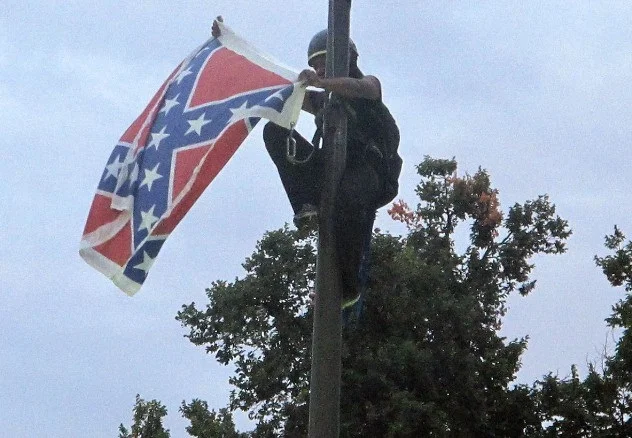
Activism of Convenience
Language and icons are powerful, and flag are among the most pervasive and powerful symbols. We need to confront these symbols, particularly when they are embraced as part of such a high-profile act of violence. However, we cannot let this discussion end there; we cannot practice only activism of convenience. The popularity of the Confederate flag is a symptom of a larger system and we must treat it as such.
The Confederate Flag, White Privilege, and Social Justice

Source: CNN.com
The Confederate battle flag has become increasingly unpopular after the racially motivated shooting in Charleston, South Carolina, which left nine members of the Emanuel African Methodist Episcopal Church dead. The Confederate flag was hardly the only racist symbol the killer embraced, but the flag has become the primary target of public outrage since the attack. As an English major and composition instructor, I am very familiar with the power language and symbols wield. Their power is real and often insidious. Identifying the Confederate battle flag as a symbol of hate and racism is important, and I am appreciative that we are having this conversation, but I believe that in many cases the backlash against the flag has been activism of convenience.
The Confederate flag is certainly cherished by many people, but they constitute a subculture. The majority of Americans and dominant American society have no substantial attachment to the flag, so removing the flag from statehouses or store shelves requires little sacrifice. It is among the least controversial steps a public figure or company could take to combat racism. Again, it is not a meaningless gesture, and some have certainly gone to greater lengths than others to enact change. But this activism of convenience is illustrated well in a quote from Annin Flagmakers: America’s oldest existing manufacturer of flags. As paraphrased in an article on NJ.com, “The Confederate flag represents only a small portion of the company's business.” Some financial and PR risks are likely involved in making such a decision, but most American companies and citizens have very little stake in the future of the Confederate flag.
When we take on social justice issues on the basis of convenience and focus our energies on the lowest stake issues, we can still enact change, but it is less powerful than taking on root causes. There has been no shortage of finger-pointing and social-media activism playing out on online:

A Facebook exchange with the governor of South Carolina (Source)
While posts like this one touch on more uncomfortable truths than taking down flags, laying blame along ideological lines offers another escape from responsibility. I am not speaking in favor of white guilt, self-loathing, or censorship, but I do feel we need to have an honest, critical dialogue that does not end at a flag. I believe there is a productive middle ground between white guilt and avoiding responsibility for systemic oppression in our country, and the overemphasis on the Confederate flag risks distracting us from more meaningful and uncomfortable work.
White supremacy was constructed by white people. It was designed and perpetuated for their benefit. As such, it should be the responsibility of white people to confront it. Even those of us who have never remotely supported any white supremacist organization have at least a responsibility to speak against overtly racist sentiments, particularly when we encounter them directly. However, if you’re like me, you’re unlikely to run into or consort with the blatant, old-fashioned white supremacy perpetuated by people like Dylan Roof, but you may regularly benefit from white privilege, which helps keep systemic oppression both alive and silent.
Dr. Robin DiAngelo uses the term “white fragility” to describe the discomfort and resistance many feel when discussing white privilege (you can find her full article here). Discussing white privilege, particularly when it comes from a person of color, can feel like an attack. After all, I did have to do a lot of hard work to be where I am today, but that doesn’t mean I didn’t have help and advantageous conditions in which to do that work. But this is exactly why our country’s dominant discourse and media should not let this discussion end with how we should react to the Confederate flag. Those in positions of power and privilege – whether politicians, prominent media figures, or those who enjoy more small-scale privilege – are particularly qualified to contribute to meaningful discussion on systemic racism. As a white male, I can make my discussion of these issues less of an attack when I am willing to acknowledge my privilege without discrediting the work I’ve also needed to do throughout my life. As a white male, I get to talk about white privilege in terms of “we”: I’m in this uncomfortable position with you; I know it can feel demeaning to acknowledge our own privilege. But I also know we can be self-critical and take responsibility for the system that supports us without throwing ourselves into a spiral of self-loathing.
Language and icons are powerful, and flags are among the most pervasive and powerful symbols. We need to confront these symbols, particularly when they are embraced as part of such a high-profile act of violence. However, we cannot let this discussion end there; we cannot practice only activism of convenience. The popularity of the Confederate flag is a symptom of a larger system and we must treat it as such. It is our duty to critically examine forces like revisionist history (in its many forms) and the double standard that treats acts committed by white criminals as lone-wolf anomalies while treating criminals of color (or even victims) and indicative of problems that define an entire group of people. These critical discussions will be controversial and uncomfortable, but if we mean to enact change and justice, these inconvenient actions are necessary.
Works Consulted
DiAngelo, Robin. “White Fragility.” International Journal of Critical Pedagogy 3.3 (2011): 54-70. University of North Carolina Greensboro. Web. 4 July 2015.
---. “Why It’s so Hard to Talk to White People About Racism.” Huffington Post, 30 April 2015. Web. 4 July 2015.
Feinberg, Ashley. “White Men Wave Their Butts in the Air for the Confederacy.” Gawker, 30 June 2015. Web. 4 July 2015.
Haley, Nikki. “Facebook post.” Facebook, 17 June 2015. Web. 4 July 2015.
Holley, Peter and DeNeel L. Brown. “Woman Takes Down Confederate Flag in Front of South Carolina Statehouse.” Washington Post, 27 June 2015. Web. 4 July 2015.
Loewen, James W. "Why Do People Believe Myths about the Confederacy? Because Our Textbooks and Monuments are Wrong." Washington Post, 1 July 2015. Web. 4 July 2015.
Marzanec, Pam. "Facebook comment." Facebook, 27 Sept 2014. Web. 4 July 2015.
O’Brien, Kathleen. “N.J. Flagmaker Halts Production of the Confederate Flag.” NJ.com, 23 June 2015. Web. 4 July 2015.
Schmidt, Michael S. “Charleston Suspect Was in Contact with Supremacists, Officials Say.” New York Times, 3 July 2015. Web. 4 July 2015.
Tumulty, Karen and Lyndsey Layton. “Changes in AP History Trigger a Culture Class in Colorado.” Washington Post, 5 October 2014. Web. 4 July 2015.
Wing, Nick. “When the Media Treats White Suspects and Killers Better than Black Victims.” Huffington Post, 14 August 2014. Web. 4 July 2015.

Word Magic
My enjoyment of the English language is rooted in my love of storytelling and the magical power of words. I mean “magic” nearly literally...Like Crowley's description of magic, language depends upon a complex system of symbols, which in an oral tradition are truly pulled out of the air. And these symbols are powerful.

Aleister Crowley
My enjoyment of the English language is rooted in my love of storytelling and the magical power of words. I mean “magic” nearly literally. Taking a definition from Magick, Book 4, by the exceedingly eccentric Aleister Crowley, magic is the “science and art of causing change” through the “incantations” that are sentences. Crowley argued that magic exists in symbols that are commonplace precisely because of their magical power. Unlike Crowley, I will stop short of believing this is an explanation of how the world actually works. Instead, his description articulates the power of language in a way that would be echoed by linguists and rhetoricians over the century that followed, as modernism and postmodernism spread.
Like Crowley’s description of magic, language depends upon a complex system of symbols, which in an oral tradition are truly pulled out of the air. And these symbols are powerful. Words have the power to change people’s deepest beliefs. The words used by practiced sorcerers are laden with significance and rarely chosen by accident; they are selected to elicit particular reactions. Words can conjure any emotion, from love to hatred. Words can change the course of history, bring about peace and war alike. But the best part about this magic is that no one sorcerer or cabal hoards these secrets. It is not the esoteric magic of Crowley. Any speaker of a language can wield this power. Working word magic can be a tricky art: both apprentice and master sorcerers can mishandle their words and have their spells fizzle or backfire. Unlocking the power of these symbols can take years of practice before they might be used to their maximum potential, but we’re all innate spell casters. Even the babbling of infants is an experiment in just how far the power of language can take them.
My favorite form of word magic is storytelling, but I do not define “storytelling” narrowly. Kenneth Burke claimed that all language is argumentation because it is purpose-driven. I break with Burke slightly to say that all language is storytelling. Perhaps that story is fictional, set in a far-off world. Or perhaps that story is a serious, down-to-earth argument about a particular policy change. Both of these stories are populated by characters, both have something important at stake, and in both the author wishes the audience to be moved, emotionally or otherwise. All uses of language intend to let us experience something new: to gain glimpses of lives that are not our own, whether they are delivered as pure narratives or dressed up in rhetorical clothing. The best of these stories enchant us, and our language’s use of the word “enchant” in this context is no coincidence. As we are naturally born users of word magic, we also love to be overtaken by just the right spell.
Or, if I had to put my enjoyment of the English language more succinctly, I would say I enjoy it because it allows me to write pieces like this one. I was able to build an extended metaphor and enjoyed doing so. Maybe I was even able to bewitch you for a few moments with my story, across time and space.
Note: This post was originally submitted to Colorado State University as part of applying for the James J. Garvey Graduate English Language Scholarship

Dominant and Marginalized Media
It has been suggested that people like Michael Brown and Eric Garner wouldn’t be dead if they didn’t break the law, which not-so-subtly implies that robbing a store or selling loose cigarettes merit an immediate death penalty. If that is even remotely justified, then choking an unarmed man to death must merit a full trial if we’re going to pretend to have a fair criminal justice system.

Source: Time.com
Jeffery Duncan-Andrade’s “Urban Youth, Media Literacy, and Increased Critical Civic Participation,” a chapter in Beyond Resistance, advocates for media’s potential for supporting “development of critical civic literacy, civic awareness, and civic participation among urban youth.” This project involved students from LA-area schools creating videos about their community as an act of activism to support social change and media literacy. While the research Duncan-Andrade conducted was focused more on media’s power for creative narratives, as opposed to strictly journalistic narratives, I cannot ignore the overwhelming role of media in the recent cases of police killing unarmed black men (or, in one recent case, a 12-year-old).
It hardly needs a source to defend the claim after these last few months, but Duncan-Andrade argues that there is a need for students to create and experience “counternarratives to those of the media, which largely are negative depictions of urban youth and their communities.” We have heard the media emphasizing more than usual the claim that race has ceased to matter in the United States, even frequently calling our culture “post-racial.” That declaration is made, of course, by the same dominant groups who have been in power throughout the history of the United States. The announcement that we’ve become a “post-racial” society does not come from social overhauls or empowerment of marginalized groups; it comes out of a convenient need the dominant groups have to absolve their system of responsibility.
These are clear examples of why counternarratives are necessary, and it is encouraging that technology has enabled more people to effectively be documentary makers than ever before. When surveillance and spectacle dominate the public discourse on crime and punishment (not always in that order), allowing marginalized people to push back against these dominant narratives is crucially important.
Or so I thought. Months ago, I watched the video of Eric Garner’s murder, and it was so disturbing that I had even convinced myself that some of the cops involved had been slapped with criminal charges not long after the video surfaced. Clearly, that belief was based on nothing but faith that such a glaring breach of trust and police conduct (to put it gently) would result in appropriate investigation and punishment. Then, on December 3rd, it was announced that the grand jury has chosen not to indict the police officer who killed Eric Garner. I admit, I don’t know all the facts. Hard as it is to imagine, maybe what happened to Eric Garner was a tragic accident or somehow merited. I can’t convince myself that is the case, but I have to acknowledge that it’s possible. However, I cannot imagine any version of this situation that would not merit a proper trial; there is an important (and often glossed over) difference between indicted and convicted. It has been suggested that people like Michael Brown and Eric Garner wouldn’t be dead if they didn’t break the law, which not-so-subtly implies that robbing a store or selling loose cigarettes merit an immediate death penalty. If that is even remotely justified, then choking an unarmed man to death must merit a full trial if we’re going to pretend to have a fair criminal justice system.
I wholly endorse the need to broader access to the necessary media for producing counternarratives. Adding ideas like mandatory body cameras for police officers seems to support media’s potential for greater transparency and justice, but media’s power for challenging dominant powers and narratives rings hollow when Eric Garner’s death had just about the best visual documentation we could realistically ask for. If media documentation is not sufficient for pushing back against the murder of an unarmed man, I can’t help but be skeptical of its potential for addressing injustices like inequitable education and systemic poverty.
I can be thankful that these tragic situations have expanded the national conversation on race in America. That conversation has often been more hurtful that helpful, but it is better than willfully perpetuated ignorance of these issues. As much as expanded media empowerment may not solve these injustices, we may not have had such a troubling and critical conversation if the video of Eric Garner’s death hadn’t erased the ambiguities that can complicate these cases. In the words of Miguel, one of the students who participated in Duncan-Andrade’s project, “having the cameras…forced [us] to open our eyes to the inequities that we had not taken notice of before; we effectively became aware citizen.” Change clearly isn’t going to happen tomorrow, but greater awareness today is the necessary first step; we just can’t allow it to be the last.
Works Consulted
Duncan-Andrade, Jeffery. "Urban Youth, Media Literacy, and Increased Critical Civic Participation." Beyond Resistance: Youth Activism and Community Change. Eds. Shawn Ginwright, Pedro Neoguera, and Julio Cammarota. New York: Routledge, 2006. 149-169. Print.
"Lawyer Says Rookie Cleveland Cop Shot, Killed 12-Year-Old." CBSNews.com. CBS Interactive Inc., 24 November 2014. Web. 10 December 2014.
Sanburn, Josh. "Behind the Video of Eric Garner's Deadly Confrontation with New York Police." Time.com. Time Inc., 22 July 2014. Web. 10 December 2014.
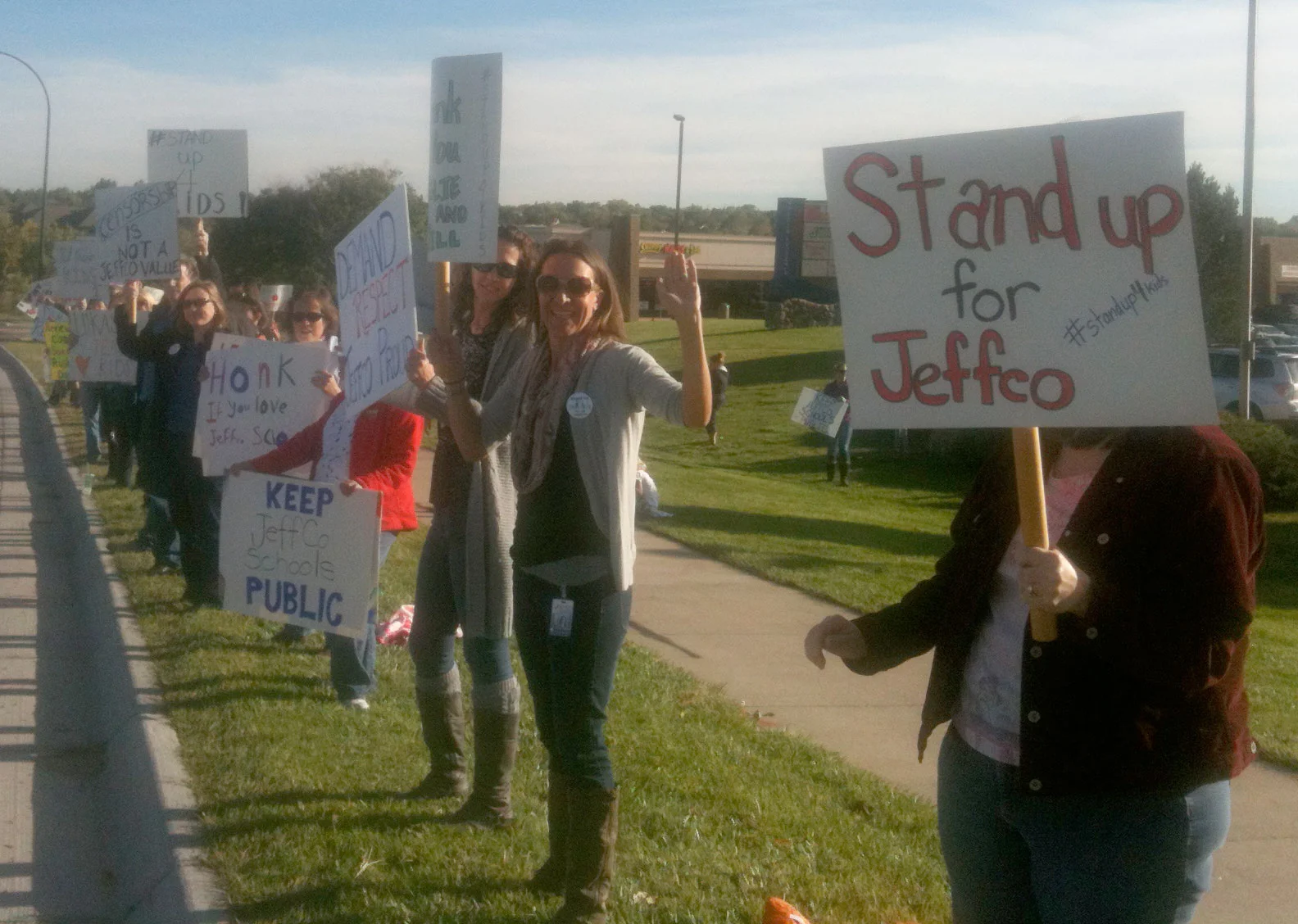
Ageism and Erasure in Colorado Curriculum Conflicts
The chairman may disapprove of students being civilly disobedient, but it seems he thinks students would only do so at the command of some outside influence. That attitude demeans students' autonomy by suggesting that they could never have the idea or drive to speak out on matters that affect them. Instead, they must be puppets for some group of adults set on corrupting our youths. "Ageism" is a clunky word, but it seems to fit here; these students' protests are being diminished by the chairman (among others) seemingly based on their age. Give them a few years and Witt may be able to more comfortably write them off as misguided adults, responsible for their own ignorance. Until then, he has to resign himself to writing them off as incapable of having an interest in education and social justice in their own right.

Jefferson Country, not far down the road from Colorado State University, has been experiencing public controversy following the school board's proposal to have a curriculum oversight committee with the ability to make changes to what schools teach. This specifically involves the history curriculum, following new AP history standards. This proposal resulted in public outcry and debate, in Jefferson County and across the country. Backlash against it included a mass "sick out" by teachers which resulted in two high schools closing for the day and protests by students. These student protests were condemned by board chairman Ken Witt:
"It's a shame we see kids on the streets instead of the classrooms...It is never OK to use kids as pawns, and it's what I think is happening here...the union message coming down through the teacher to get kids to deliberately get out and protest something they don't have any facts about whatsoever."
This criticism is made all the more poignant when a central point of contention in the board's proposed curriculum changes is to avoid texts which might encourage "civil disobedience, social strife or disregard for the law" and instead emphasize patriotism and the "positive aspects" of U.S. history.
The chairman may disapprove of students being civilly disobedient, but it seems he thinks students would only do so at the command of some outside influence. That attitude demeans students' autonomy by suggesting that they could never have the idea or drive to speak out on matters that affect them. Instead, they must be puppets for some group of adults set on corrupting our youths. "Ageism" is a clunky word, but it seems to fit here; these students' protests are being diminished by the chairman (among others) seemingly based on their age. Give them a few years and Witt may be able to more comfortably write them off as misguided adults, responsible for their own ignorance. Until then, he has to resign himself to writing them off as incapable of having an interest in education and social justice in their own right.
Beyond Resistance: Youth Activism and Community Change, by Shawn Ginwright, Pedro Noguera, and Julio Cammarota express views very much at odds with the attitude of Witt and those like him. The case studies within Beyond Resistance emphasizes the important role social activism can have in education, particularly for children of color and other marginalized groups. The first chapter of this book charts changes in education in California and the resultant changes in attitudes towards youth, particularly youths of color. In that chapter, Daniel Hosang describes the "antagonistic stance toward youth raised outside the sanctity of white middle- and upper-class life" that rose out of the 1980's. This led to "profiling the growing number of black and brown Californians as both menacing and undeserving." Various approaches have been taken to address the "problem" with these youths, such as emphasizing after-school programs.
In the sixth chapter of Beyond Resistance, by Ben Krishner, he remarks "youth must also have the opportunity to speak up and transform institutions shaping their lives." This chapter focuses on how adults can foster youth activists through apprenticeship systems in which the adult surrenders enough power to properly empower the youth. In other words, this design (as with YPAR) is to avoid the "puppet master" role of adults in the way Ben Witt fears. Instead, it puts faith in youth in believing they can (and want to) make a difference in their communities and the power structures that govern their lives.
Jefferson County is not California in many ways, not the least of which is its racial demographic. The population of Jefferson County is 79.9% white. Although Colorado's struggles may not be identical to California's, this distrust and disempowerment is made all the more troubling in light of the push against materials that might not put white Americans in sufficiently positive light. There is a version of white privilege that has cropped up its head in our education policy: one that opposes teaching about America's mistakes and darker eras. In a county where people of color are a significant minority, such a Eurocentric message may be all the more successful in solidifying white privilege and framing any resistance to that privilege as oppression.
Jefferson County's politics is not an isolated issue in Colorado. Pam Mazanec, a member of the Colorado Board of Education, also criticized the AP changes. In a series of comments on Facebook, Mazanec expresses her concern that the AP standards were designed primarily to promote an "agenda," rather than accurate information (her only cited source is the conservative National Association of Scholars). As an example, she points to white people not being given enough credit for "voluntarily" ending slavery:
"Yes, we practiced slavery. But we also ended it voluntarily, at great sacrifice, while the practice continues in many countries still today!...This is part of the argument that America is exceptional." She also adds, "the concern is that what students need to learn to do well is a negative view of much of our history."
I will say there are plenty of things to celebrate about the United States, but a thorough and accurate understanding of American history should include all Americans, and it often hasn't been a happy story for everyone. People of color and women are just as significant of a part of our history as a bunch of old white men, and America's history with those marginalized groups has quite a few negative things worthy of serious discussion. No one is saying students shouldn't learn about some of the positive, remarkable, and exceptional things that have happened in American history, but we cannot pretend to have an accurate picture of our past or present without recognizing and learning from our mistakes.
Colorado is more fertile of ground for these white-privilege-laden ideologies than I would like to admit as a native-born Coloradoan. In that context, it is all the more encouraging to see students protesting these changes. This sort of youth civil disobedience and activism is exactly what we need in our education system, which is almost exclusively run by adults. At risk of being "ageist" myself, I think there is a problematic disconnect between the ideologies of some members of older generations and the subtlety oppressive reality many youths face. If we mean to erase or downplay the complicated and, yes, often negative history that helped construct these oppressive structures, these marginalized groups will have that much less of a reason to feel they really can be heard or have valid opinions on the issues that affect them.
Above all, we should fight the claim that civil disobedience is somehow separated from patriotism or a functional society. If I had to select the early trait of America I consider to be most exceptional it would be the foresight to include in Article V of the Constitution the ability to add amendments. Any truly just society must be one that understands mistakes will be made and change is necessary. To grow as a society, we will benefit from meaningful discussions of our failings and even from civil disobedience, when necessary. Age should be no reason to discourage civic involvement, and we should not degrade youth activism by assuming they could only be interested in their society against their will. And if they're not interested on their own, we should seriously consider what we may have done to make them think they should not or cannot have an invested interest.
Works Consulted
"2012 Demographic Update." Jefferco.us. Jefferson County, 2012. Web. 15 Oct 2014.
Ginwright, Shawn, Pedro Noguera, and Julio Cammarota. Beyond Resistance: Youth Activism and Community Change. New York: Routledge, 2006. Print.
Gorksi, Eric. "Jeffco school board curriculum committee idea latest divisive issue." Denver Post.com. The Denver Post, 25 Sept 2014. Web. 14 Oct 2014.
Gorski, Eric and Kiernan Nicholson. "Two Jeffco high schools close Friday after teachers absent." Denver Post.com. The Denver Post, 19 Sept 2014. Web. 14 Oct 2014.
Mazanec, Pam. "Facebook comment." Facebook. 27 Sept 2014. Web. 15 Oct 2014.
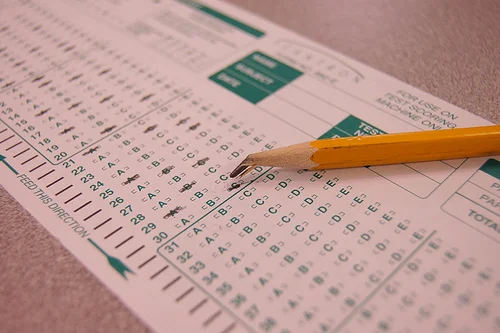
Pragmatism v. Idealism in Education
While I appreciate being prepared for more than just the bright side, the "real" world I will be entering into after I graduate often seems demoralizing or worse. I'm bound for the world of Senate Bill 191, a world where I can be fired for any reason whatsoever in my first three years, a world ruled by non-experts, a world where the moment by the Common Core reigns (funded and designed largely by people with no classroom teaching experience), and a world that is only a stone's throw from a district whose board seems to think teachers are the primary problem with our education system. In such a world, I can understand the temptation of settling for old fashioned, comfortable answers.

In "Humanizing Research in Dehumanizing Places," a chapter in Humaizning Research, authors Jason G. Irizarry and Tara M. Brown chart several participatory action research (PAR) projects conducted with students in public schools. This sort of research is focused on empowering the student participants by giving them central roles in all phases of the research, from initial proposals to final presentations. These particularly studies also aimed to help students better understand their school system, and how that system can perpetuate disadvantage and segregation for some populations. The authors cite some strong examples of this project being successful for the student participants, such as quoting one student as saying "I never thought anything about...being made to think I'm dumb, that kids like me are dumb....Now I realize I am smart, a researcher, a student. More important, doing that research made me feel like a full person." That is a very powerful response that helps make the case that PAR can be an effective method for engaging and empowering students who may otherwise be failed by our education system.
Of course, these projects were not received as warmly by the teachers of the schools in which the research took place. No small amount of this chapter was spent discussing the conflicts that arose in conducting this research, pedagogically and politically. Following their participation in PAR, the authors note that students "became less willing to be passive recipients of education and demanded more from their teacher...sometimes [critiquing] the practices of their teachers." The authors note that while some teachers and administrators were supportive of this research, "the responses of [many] teachers were often characterized by rancor and suspicion." As a teacher in training, I understand why this reaction from students would be uncomfortable for teachers, but should we really be asking students to be accepting of inferior practices for the sake of our own comfort?
But the issue is more complicated than that. My education as a teacher has been a constant struggle between idealism and pragmatism. There are wonderful, inspiring, and persuasive arguments and philosophies about what education could or should be. The trouble is that's often at odd with what education is. While I appreciate being prepared for more than just the bright side, the "real" world I will be entering into after I graduate often seems demoralizing or worse. I'm bound for the world of Senate Bill 191, a world where I can be fired for any reason whatsoever in my first three years, a world ruled by non-experts, a world reigned over for the moment by the Common Core reigns (funded and designed largely by people with no classroom teaching experience), and a world that is only a stone's throw from a district whose board seems to think teachers are the primary problem with our education system. In such a world, I can understand the temptation of settling for old fashioned, comfortable answers. Policies sure to fail a sizable group of students, such as "teaching to the test," not only begin to sound more reasonable, they sometimes feel like they're all but necessary.
This complacency, this inclination towards easy answers for students, administrators, and politicians, is something that must be resisted. I yearn to implement any number of the exciting, perhaps even revolutionary, ideas I have had the good fortune to learn about through my education. I am just unsure if I will find myself in a climate that wants a teacher who would appreciate approaches like PAR. These concerns are sometimes enough to make me wonder if teaching in this climate is really what I want to do and whether Colorado is the right place for me, even though there's nowhere I would rather be.
Surely I'm in for my share of challenges and shocks as I got into my first year of teaching at the secondary level. For that, I appreciate the education that is preparing me for the good and the bad. I just wish I knew how to even begin balancing the demands of the "real" world and the brilliant philosophies and approaches that remind me why I want to be a teacher. Particularly in an ever-changing political climate surrounding an innately political career, there may be no stable balance. If the school system and its accompanying politics are such a major part of this dilemma, then perhaps methods like PAR are exactly what we need. As uncomfortable as it is, students demanding better from us may help support real, long-term, student-centered change. As is the recent trend with these blog posts, I have far more questions than I have answers, but I can keep trying to be optimistic.
Works Consulted
Colorado Department of Education. "Senate Bill 10-191." Colorado Department of Education, m.d. Web. 2 Oct. 2014.
Gorski, Eric. "Jefferson County Public Schools Faces Crisis Over School Board Changes." Denver Post, 28 Sept. 2014. Web. 2 Oct. 2014.
Irizarry, Jason G. and Tara M. Brown. "Humanizing Research in Dehumanizing Places: The Challenges and Opportunities of Conducting Participatory Action Research with Youth in Schools." Humanizing Research: Decolonizing Qualitative Inquiry with Youth and Communities. Eds. Django Paris and Maisha T. Winn. Los Angeles: Sage Publications, 2014. Print.

Out of this World
Science fiction is one of the best tools we have for empowering our students' identities and freeing their imaginations, while also encouraging critical thought with logical rationalization....There are plenty of obstacles in our way, but we have the power to ensure that we are not one of them. We can be allies in empowering students' imaginations in the sciences and the arts, whether they have down to earth dreams or ones that carry them out of this world.

"A Rose Made of Galaxies Highlights Hubble's 21st Anniversary" Source: NASA
The Language Arts' Interdisciplinary Role in Fostering Imagination and Skepticism
Part 2 of 2
In my last blog post, I talked about how important the space program is to science education and our culture as a whole. Neil DeGrasse Tyson makes a good case that the space program benefits many parts of our society, but support for the space program has to come from a cultural shift, not just budgetary or legislative changes. Tyson primarily focuses on the space program’s relationship with the sciences. This reciprocal relationship is more obvious than, say, how the language arts can build support for the organizations like NASA, and benefit from its discoveries. One factor I previously argued hinders the space program is a lack of validation for students’ identities as scientists and having too few exciting opportunities for what they can do with their passion for the STEM fields once they’re out of school. I believe the two biggest contributions the language arts can make to NASA and the STEM fields is fostering students’ skepticism and imagination. The language arts are largely in the business of encouraging creativity, which depends upon imagination. Other aspects of the language arts, like literary criticism and critical reading, encourage students to think skeptically and critically.
I see two major roadblocks to skepticism and imagination being wholly embraced in the language arts classroom: treating the arts as an isolated field and marginalizing "genre" fiction in favor of "literary" fiction. The tendency to see English as something isolated from other fields, and particularly isolated from the STEM fields, suggests that skepticism in literature is something different from skepticism in the “hard” sciences. I do not believe many teachers truly believe the work of the English classroom is irrelevant to other fields, but our curriculum design, standardized tests, and public discourse about education often treat them as isolated concerns.
Imagination is actively supported in the English classroom when it comes to creative writing and even close reading skills, which often encourage students to picture what they read like a movie in their head. However, this pursuit is complicated by limits on what is permissible and privileged in the English classroom. “Literary" fiction is often the term for the relatively realistic fiction that is favored in many language arts classrooms and standards. This stands in contrast to “genre" fiction: a dirty word that encompasses many genres, which include science fiction, fantasy, and historical fiction. The rhetoric of these two labels makes a clear value judgment: one is literature and the other is not. The fostering of imagination is in no way absent from the language arts classroom, but too often it is limited.
The space program depends on students’ abilities to have grand dreams and great ambition. In an interview with The Atlantic, Neil DeGrasse Tyson illustrates how the sciences can suffer from dreams that are too down to earth:
If I say, ‘design me a plane that’s more fuel-efficient, because the country needs that now,’ you’re not going to get any truly transformative, innovative solutions. Instead, if I say, ‘Who wants to build an air foil that’ll navigate the rarified atmosphere of Mars?’ or ‘we’re about to go to Mars. Who wants to study life forms that are yet to be understood that we may discover?’ I’m going to get the best engineers; I’m going to get the best biologists. I’m going to get the best of those categories because it’s a goal befitting the depth of ambitions of those students.
NASA both depends upon and supports such a “depth of ambition.” The idea that students should restrain their imagining to realism risks devaluing students’ identities as readers, writers, and thinkers. It could also undermine the language arts’ potential for supporting the “culture of innovation” necessary for reinvigorating the space program.
Let us look at an example. Albert Einstein conducted a famous “thought experiment” at the age of sixteen. He imagined that he could travel as fast as a beam of light and wondered what it might look like; would it appear as a stationary wave or not? These musings launched him on the road of discovering his theory of special relativity. The theory itself outlines a universe that seems unintuitive: one where time is not constant. The theory of special relativity is arguably the most revolutionary scientific discovery of the twentieth century and it was born out of a teenager imagining he could travel as fast as a beam of light – which is, of course, absurd. That daydream is so far removed from the realm of the possible that it should have little bearing on reality, no “use value” in the Marxist sense. Why should someone imagine something that can never be achieved? Would time not be better spent daydreaming about a loved one, a future career, or practical inventions? Or perhaps it would be better to restrict scientific speculation to the here and now, based on personal experience and immediately observable reality? Proposing such limits would be unacceptable, and even antithetical, to a great deal of scientific thought. Yet these sorts of limits are encouraged by the philosophies that guide traditional literary culture and education.
Many students, myself included, first discovered a passion for reading through “genre” fiction. It took until third grade for me to willingly take up a book and read. More specifically, it took me discovering the Animorphs series, which revolve around teenagers who can transform into animals, thanks to alien-granted powers. They were absurd stories indeed. That passion for science fiction has never faded; my parents were able to convince my stubborn teenage self to enroll in college through the argument that I could study and write science fiction there. Throughout my undergraduate degree, I read the occasional science fiction text, and my intermediate creative writing class allowed us to write “genre” fiction. However, once I moved on to advanced creative writing, we were once again forbidden from writing anything beyond realism. There is an unfortunate irony in a creative writing or literature classroom forbidding students to write genres they’re passionate about. We are in the business of fostering creativity, and we are often prepared to fight against the demand that our arts have a “use value.” So why favor realism?
James Paul Gee’s book, Situated Language and Learning: A Critique of Traditional Schooling, focuses on how students acquire “specialist language” as a central part of education. To acquire this language, Gee argues that students must feel that they could have a valid identity, simulated or otherwise, as someone who uses that specialist language. In other words, a student would have to be able to feel they have a valid place as someone who “does” science before they could begin to willingly acquire the specialist words and knowledge of science. Gee adds that “people learn new ways with words, in or out of school, only when they find the worlds to which these words apply compelling.” I believe that some students closely associate their identities as readers and writers with science fiction and similar genres. Science fiction is often allowed during free time reading, but it is usually denied the prestige of proper literature. That is only a half-hearted nod to students’ identities, not true validation. If Gee is correct, excluding science fiction from serious academic discourse could run the risk of alienating students who feel that their identities as learners are being excluded as well. Frowning upon science fiction could then put us doubly at a disadvantage in our pursuit of a culture that has a passion for the sciences; we pass up the opportunity to use a uniquely applicable genre of fiction and we may distance some students from the knowledge and experiences we want them to gain in the English classroom.
The value of science fiction in the English classroom goes beyond building on students’ passions and identities; it is also has unique potential in the language arts. Critic Carl Freedman, in his book Critical Theory and Science Fiction, argues that science fiction is naturally inclined towards critical theory. He argues that “the science fiction world is not only one different in time or place from our own, but one whose chief interest is precisely [that] difference.” In contrasting a fictional world against our own, science fiction becomes a dialectical act of criticism. Science fiction author and critic Samuel R. Delany echoes Freedman’s emphasis on difference in his article “The Semiology of Silence.” Delany argues that the world building that is central to most science fiction is an argument about the world we inhabit. He points to the common theme of faster-than-light travel as being an argument that the Einsteinian model of the universe will be changed in the future, if not wholly overthrown. Delany celebrates this potential in science fiction because these arguments about our present world are “[portrayed] clearly, forcefully, and with tremendous verbal economy,” the very traits that are valued in literature and creative writing classes.
Delany hones his argument down to the possible meaning science fiction can construct even at the sentence level. He provides the examples “her world exploded” and “he turned on his left side.” In realism, the possible meanings of these sentences are very limited. In “genre” fiction, new possibilities for meaning are opened up; a world really could explode in science fiction, or perhaps a man is turning on is robotic left side. Those examples might be a little fanciful, but is that any reason to discourage students from finding genuine enjoyment by playing with the possibilities of language? In the language arts, don’t we have every reason to encourage such playfulness with language? Critical, dialectical, and creative thought are all at the heart of the language arts. Science fiction is a unique way to approach all three, from large-scale world building to small-scale sentence construction.
Science fiction’s role in the language arts and the sciences come together in another defining feature of the genre: speculation and rationalization. Speculation is rooted in the known. The inventions, technologies, species, and events in science fiction tend to be built out of some part of the author’s past or present. But another defining feature of science fiction is that these speculative elements are rationalized within the story; stories tend to give some explanation for how they came to be or how they work, at varying degrees of plausibility. This is the core of scientific thought; this is the literary form of hypothesizing and experimenting. Returning to the example of Einstein imagining himself as traveling as fast as a beam of light, this speculation would not have become truly valuable without Einstein’s attempts to rationalize this situation (or, more specifically, his inability to rationalize it). Likewise, his speculation would not be as revolutionary if it wasn't so absurd.
The same dance of speculation and rationalization is necessary in the language arts. Rationalization can happen in literature in ordinary ways; characters and events must be constructed in believable ways or readers likely won’t find them relatable. Rationalization in realistic fiction alone may lead to some understanding about human behavior which is undeniably valuable, but it is less likely to lead to something new, or a novum in the favored word of many science fiction theorists. In literary criticism, speculation that cannot be rationalized will not be very persuasive. Conversely, an argument that is not very original, not built out of enough speculation and creative thought, will not be very interesting. Like science, the arts lose much of their significance without powerful imagination and logical rationalization in the pursuit of something new. That is where science fiction builds a unifying bridge between the disciplines.
As much as I am passionate about the sciences, and as much as I want new avenues to “hook” students into the STEM fields, I do not mean to privilege them above the language arts. STEM is becoming a widespread fad in education, surely due in part to its apparent economic use value. The end goal of the arts should not be to support the sciences. Nor should the end goal of the sciences be to support the arts. Instead I mean to emphasize that these fields are not as disparate as they may often seem. Teachers in both fields are not alone in their missions. There are many ways to bridge the apparent gap between these disciplines, but I firmly believe one of the most effective connections can be built through science fiction and other genres that allow students’ imaginations to be unfettered by reality.
For the language arts to support the culture of innovation Tyson emphasizes, I propose that we follow the argument of Carl Sagan in the opening segment of the original Cosmos:
We wish to pursue the truth no matter where it leads. But to find the truth we need imagination and skepticism both. We will not be afraid to speculate, but we will be careful to distinguish speculation from fact. The cosmos is full beyond measure of elegant truths, exquisite interrelationships, of the awesome machinery of nature.
The surface of the earth is the shore of the comic ocean. On this shore, we’ve learned most of what we know. Recently we’ve waded a little way out, maybe ankle deep, and the water seems inviting. Some part of our being knows this is where we came from. We long to return, and we can, because the cosmos is also within us; we’re made of star stuff. We are a way for the cosmos to know itself. The journey for each of us begins [in our imaginations]…it will carry us to worlds of dreams and worlds of facts. Come with me.
Sagan himself is a creative, eloquent, and skeptically rational man. Without the artistry of his language, Sagan would have been less effective in persuading and moving his audience. Without his dedication to skepticism and logic, he would not have helped make such significant strides in astrophysics and astronomy. Science fiction is one of our best tools for empowering our students’ identities and freeing their imaginations, while also encouraging critical thought and logical rationalization. Accepting this idea requires only a small shift: instead of beginning with content students must learn and finding ways to incorporate their passions where we can, we instead begin with their passions and find ways to incorporate the necessary curriculum into that framework. There are plenty of obstacles in our way, but we have the power to ensure that we are not one of them. We can be allies in empowering students’ imaginations in the sciences and the arts, whether they have down to earth dreams or ones that carry them out of this world.
Works Consulted
Delany, Samuel R., Sinda Grefory, and Larry McCaffery. “Semiology of Silence.” Science Fiction Studies 14.2 (1987): 134-164. JSTOR. Web. 24 April 2014.
Freedman, Carl. Critical Theory and Science Fiction. Hanover, NH: Wesleyan University Press, 2000. Print.
Gee, James Paul. Situated Language and Learning: A Critique of Traditional Schooling. New York: Routledge, 2004. Print.
“The Shores of the Cosmic Ocean.” Cosmos. Writ. Carl Sagan, Ann Druyan, and Steven Soter. Dir. Adrian Malone. Carl Sagan Productions, 1980. DVD.

Down to Earth
Children often dream of growing up to be superheroes, and astronauts still qualified as superheroes when I was young. Now, NASA’s budget is a shadow of what it once was, the United States has to hitch a ride with other countries in order to get people into space, and there are few exciting prospects for human space travel in the near future. Appreciation for space exploration and its impact on our culture have faded as I’ve grown up. The superheroes have fallen back to earth.

Astronaut Karen Nyberg in the International Space Station. (Source: NASA)
The Decline of the Space Program
Part 1 of 2
Starting when I was five, my brother and I would sometimes sneak out of bed at 5:00 or 6:00 a.m. to watch TV. Our usual TV fare consisted of cartoons and Star Trek: The Next Generation, but these early morning escapades were for something different. On those occasions, we would turn to the public access channel to watch something we found truly amazing: a Space Shuttle launch. These events could drag on for more than an hour with little activity and almost no sound or voice-over. There must have been something truly magical about such an event if what was effectively a still image could hold the attention of a five- and seven-year-old for so long. I grew up watching Star Trek, Star Wars, and most other science fiction I could get my hands on. The launch of a Space Shuttle was a chance to see real-world space heroes in action.
When I was a child, the space program was still making the headlines. Two years before I was born, the Space Shuttle Challenger exploded shortly after takeoff. The first component of the International Space Station was launched when I was ten. Mir, which I had the good fortune of once seeing through a telescope, was decommissioned and destroyed when I was thirteen. When I was fifteen, the Space Shuttle Columbia broke up on re-entry. Finally, when I was 23, NASA launched the Space Shuttle for the last time.
The people who risked their lives in these voyages, and the engineers who made it possible, were rightly considered heroes. It was no surprise, then, that kids my age wanted to grow up to be astronauts. Children often dream of growing up to be superheroes, and astronauts still qualified as superheroes when I was young. Now, NASA’s budget is a shadow of what it once was, the United States has to hitch a ride with other countries in order to get people into space, and there are few exciting prospects for human space travel in the near future. Appreciation for space exploration and its impact on our culture have faded as I’ve grown up. The superheroes have fallen back to earth.
I believe one of the most crucial (and elusive) components of education is passion. If students cannot be excited about what they are learning, education becomes a far more difficult and unpleasant uphill battle. As an English teacher, I am more fortunate than some; many students have a passion for stories of one kind or another and I have many avenues for building on that interest. The STEM fields are not always so lucky. Particularly for students who struggle with math, the sciences can be intimidating and students can feel that they have no inroad into the complex work of science. There is no single solution to our students’ difficulties with science, but finding ways to excite a passion for science is an important part of addressing these issues.
In another life, I’d like to think I could have been a physicist. My love of science fiction, fondness of stargazing, and, maybe most significantly, my admiration for astronauts and the space program fueled my interests in science. Something like the United Federation of Planets was not likely to be created in my lifetime, but journeys to Mars and beyond didn’t seem so improbable. If I struggled less in math, maybe I would have pursued being an astrophysicist instead of an English major. NASA’s national presence declined as my struggles with math increased. While my difficulties in math were probably the biggest factor that deterred me from pursuing a career in science, I wonder how much I may have also been deterred by NASA’s disappearance from the headlines. At a time when America’s scientific literacy is suffering, we need all the help we can get in exciting students about the STEM fields.
In 2012, astrophysicist Neil DeGrasse Tyson gave a keynote speech at the 28th National Space Symposium discussing the decline of NASA and particularly human space flight. This speech charts areas Tyson believes the space program influenced: ranging from Doctors without Borders to the EPA to fins on cars in the 1950’s. One of the most important roles of the space program in our national consciousness was as a means to excite students about the STEM fields:
"[In the 1960’s], you didn’t need special programs to convince people that science was a good thing in school. You didn’t need special programs to show people that engineering and math - the STEM fields - that these are useful to society, to our identity as a nation, because the headlines that were writ large over that era had built into them the fact that innovation created those headlines: innovation brought to you by an ambitious community of scientists, technologists, engineers, and mathematicians."
"Space is hard, space is dangerous, space is exciting. Not only do you innovate, these innovation make headlines, and those headlines work their way down the educational pipeline. Everybody in school knows about it. You don’t have to set up a program to convince people that being an engineer is cool. They’ll know it, just by the cultural presence of those activities. You do that, it’ll jumpstart our dreams, that’s what it’ll do."
Tyson believes that reinvigorating innovation and a passion for the sciences needs to come from more than educational policy or teacher training. Without something like the space program, we lack programs and goals “befitting the depth of ambitions of [these] students,” as he says in an interview published in The Atlantic. We, as teachers, have an important role to play, but we can only be one part of the culture that is needed to support a passion for the sciences.
“Teacher training? We need that. It is a necessary but insufficient condition to make this happen [to build and keep a strong innovation culture in the United States]. You can have an awesome teacher in middle school, high school, now you want to become a scientist, you come out the other end of that educational pipeline. What do you do? We lost an entire generation of these smart people. They became like investment bankers or lawyers out of the 1980’s and 90’s, ‘cause there’s no place for them to take their interest in science. If you have big, bold, ambitious projects, you get them all. Especially since the NASA science portfolio involves biologists: we’re looking for life. It’s got chemists, geologists, astrophysicists, physicists. The NASA portfolio touches all of these. Not only that, we need the electrical engineers, the mechanical engineers, the structural engineers. NASA is a one agency showdown.”
According to recent studies, the performance of students in the United States is particularly weak when it comes to math. The PISA survey argues that “students in the United States have particular weaknesses in performing mathematics tasks with higher cognitive demands, such as taking real-world situations, translating them into mathematical terms, and interpreting mathematical aspects in real-world problems.” Our educational philosophies tend to strive towards purposeful lesson design and real-world application, but it seems math is one area that is falling short of these goals. Tyson’s argument implies that part of the problem may be a lack of excitement for math in the real world, that students have little opportunity to innovate in the science fields like space exploration and are instead drawn toward other math-heavy industries like banking and programming.
Private industry is, of course, crucial to our economy and many people aspire to do great things through private companies. It often seems that the private sector may hold the future of space exploration as SpaceX advances towards being a major supplier for the International Space Station and companies like Planetary Resources hope to begin mining asteroids. NASA seems to be fading into the background as shuttle flights have been discontinued and the International Space Station will be decommissioned around 2020. For my part, I find it hard to take pride in the space successes of private companies; they’re not something I can feel like I’m a part of. Even if I was never involved with NASA, it still felt like we, as Americans, were collectively making these strides. When it is an achievement of a private company, the success feels like something that’s happening to someone else, over there. Even if the achievements of private companies could excite students about the sciences, Tyson rejects the idea that the private sector is prepared to step into the vacuum, or even capable of doing so:
"Will space entrepreneurs lead the frontier in space, rather than NASA? The answer is: no! That cannot happen. It will not happen. Because space is expensive, it is dangerous, the risks are unquantified. You put all three of those together and you can’t say, 'okay, who’s in?' It doesn’t work that way. There’s no business model for a corporation to do something expensive with uncertain risks where you might die. Governments have historically taken on those first steps….In the 1960’s, low Earth orbit was a frontier for the nation. It is not a frontier anymore. So sure, let private enterprise have at it, provided that NASA still gets to go someplace beyond. Otherwise we’re just closing up shop.”
The Common Core, and most of our general education discourse, is often focused on career readiness and college preparation. I frequently hear complaints from my college freshmen about having to take classes that aren’t related to their degree or future career. Based on things like these complaints, and the majority of my students being business majors, college is a means to an economic end for many students. Ten years ago, in his book Situated Language and Learning: A Critique of Traditional Schooling, James Paul Gee argued that the “new capitalist world” is one that depends on employees marketing themselves to potential employers. He describes that “Millennials like school less with each passing year, but accept it as necessary for their future…precisely because they (and their parents) are aware of the role that educational credentials, especially from elite institutions, play in the new capitalist world.” When we have given students a world where economic gains are the hallmark of success, and when headlines are dominated by economic concerns and scientific discovery is pushed far out of the limelight, this attitude makes sense. In such a world, why shouldn’t they become investment bankers and lawyers? Even if they enter into academia, their time will be increasingly dominated by politics and economic issues as universities grapple with shrinking budgets and the prospect of shifting to a business model. Without something like the space program, we are giving students little reason to have anything but down-to-earth dreams.
As with the success of private enterprise, there is nothing wholly wrong with this attitude, but it does not align with what I believe the purpose of education to be. Nor does it align with most childhood dreams of becoming literal or figurative superheroes. According to a Forbes article published in 2008, “superhero” was the most popular career choice among the kindergarteners they interviewed (being published in Forbes, the dreams jobs had to be discussed in terms of prospective salaries). There will come a time when a student will accept that they cannot be Spiderman, but I believe it is in our best interest as a nation to give them a middle ground between Spiderman and an investment banker, to give them dreams of being the heroes I grew up adoring. Astronauts can’t be just smart, or just fit. It does not mean pigeonholing someone as a limited specialist. A great superhero is one who is smart, strong, and moral. No matter how much a child may dream, they’re not likely to become a superhero out of a comic book, but if our country gives them exciting reasons to get involved in the space program, being an astronaut may not have to be second best.
Enabling these dreams requires a culture that fosters them, and for the sciences I know of no better means than reinvesting in the space program. Tyson’s call to double NASA’s budget from about 0.5% of the federal budget to 1% would be a meaningful step forward, but a culture that supports exploration, innovation, and passion for the sciences cannot be constructed solely through legislation and budgeting. This has to be a social change as well as a budgetary one. A strong space program must arise out of a culture that supports the program's ideals, and in return it will reinforce a culture that values the sciences and the heroics necessary for human space exploration. Next time I will discuss the role I feel teachers outside of the STEM fields have in building this culture. While I agree with Tyson that our space exploration should not be limited to one destination or another, the example of the first crew that might voyage to Mars is a strong illustration of the kind of heroes the space program might build:
"We have built into our culture this concept of the 'right stuff.' I think it's a great bit of iconography of [the space] era. We milked it quite well, I think. Heroes are made out of this. I think that first crew, whatever its numbers...is a special class; they're doing what no one has done before. This is not a lottery. You want people who you want to emulate. You want people who did well in school. You want people who ate healthy. You want people who are moral. You want people who can become that next generation of heroes, because if they make it to Mars, and even if they don't, they're our heroes. They're our heroes in life and in death."
When students have these kinds of heroes to look up to, or even to someday become, teachers will have a substantial advantage in our own difficult mission of exciting students’ passions for the sciences and education as a whole. It is up to us as a society to help these superheroes take flight.
Works Consulted
Ewalt, David M. "When I Grow Up: Kids' Dream Jobs." Forbes. 1 Oct. 2008. Web. 6 August 2014.
Gee, James Paul. Situated Language and Learning: A Critique of Traditional Schooling. New York: Routledge, 2004. Print.
Heller, Chris. "Neil DeGrasse Tyson: How Space Exploration Can Make America Great Again." The Atlantic. The Atlantic Monthly Group, 5 March 2012. Web. 6 August 2014.
"ISS037-E-026900 (4 Nov. 2013)." Photograph. International Space Station Imagery. NASA, 2013. Web. 7 August 2014.
National Aeronautics and Space Administration. "FAQ." nasa.gov. NASA, n. d. Web. 7 August 2014.
Organisation for Economic Co-operation and Development. "Programme for International Student Assessment (PISA) Results from PISA 2012: United States Key Findings." OECD, oecd.org. 2012. Web. 7 August 2014.
Planetary Resources. "Our Vision and Mission." planetaryresources.com. Planetary Resources, n. d. Web. 8 August 2014.
Tyson, Neil DeGrasse. "Launch Keynote." 28th National Space Symposium. Broadmoor Hotel, Colorado Springs, CO. 23 April 2012. Web. 8 August 2014.

"I Could Be Magical"
"Thinking that I could be magical in some way helped, too. You know, magic is where you make the impossible possible. I think a lot of people in lower income families and in poverty don’t have that as a view; they don’t get to see that any other way. These things that are impossible can’t be possible. I guess it’s just a different way of looking at life."
Young Adult Genre Fiction's Role in Empowerment and Identity

Maria
Young adult literature enjoys widespread popularity. They are often the most successful book in economic terms, the crowning achievement of which is, of course, the Harry Potter series. While it is treated as a second-class form of literature (not appropriate for "adults;" it's right there in the name), it is beloved by many. It can serve as a gateway to more complex literature, and it can entice readers who might not otherwise pick up a book. But if a recent article from Slate.com is any indication, there is still considerable prejudice against these books. The idea that someone should be ashamed of indulging in books in their free time apparently lives on after we all leave high school. How could we forget that reading (at least the wrong thing) is uncool, and that we should strive for acceptance from our peers? If this is how we treat adults who read for pleasure, teens must be all the more troubled, as their English classes and the adult world expect them to put away childish things and move onto "adult" reading. This attitude reinforces the adolescent fear: reading can make you an outcast.
Or is it the other way around? Maybe it is no coincidence that YA fiction is labeled "escapism." Maybe being an outcast can make you a reader.
In the case of Maria, reading was a means of escape. Maria is a 26-year-old woman who is from a traditional Mexican family in Fort Collins, Colorado. Today, she is the first person in her family to go to college, and one of the few that reads for fun. She thinks those two traits are likely connected. Maria has loved reading since the second grade: "I was good at [reading]. I was better at it than anyone in my family. So it became my thing. It still is my thing." She believes that this passion for reading has enabled her to be academically successful today. Her favorite stories to read are young adult fantasy novels, and she traces the roots of this passion all the way back to the first Harry Potter book she read in fifth grade. For her, those books were something special. They weren't just a means of entertainment, they showed her a very special kind of escapism: "other ways of living."
If young adult literature can turn a girl into the only reader in her family, set her on the path to be the first college graduate in her family, and show her "other ways of living," then these books should be highly valued and respected. "Escapism" is often a considered a vice, something for people who lack the will or skills to handle reality. For Maria, young adult books were a means of escape. They were not only an escape from her loneliness as a teenager, they may well have given her a means to escape the cycle of poverty. This escapism should be highly prized, as should the literature that enabled it. To learn more about how reading young adult fiction influenced her life, I sat down with Maria to ask her some questions.
Paul: How would you say you first got hooked on reading?
Maria:
My second grade teacher really helped me learn to love to read. That was one of the things she really helped me with. But my fifth grade teacher really helped me learn how to love fantasy, I guess. He really got me into the genre. He read the first Harry Potter book to us in class. I told him that I had the collection of the C.S. Lewis Chronicles of Narnia series, but I was missing one of them, I was missing the Magician’s Nephew. He asked me if I liked them, and I told him I did enjoy them. The next day, when I came to class, there was a copy of the Magician’s Nephew on my desk.
He really encouraged my reading in that sense. He asked me questions about what I was reading, he was engaged, and, I mean, he gave me a book. He encouraged me in that way. My family wasn’t very affluent. When I got books it was usually from the library or for Christmas. Before that, I read strictly non-fiction and science a little bit. The science we were learning in elementary school was pretty basic. I remember liking to read about space and the forest. I really liked the forests. And then with my fifth grade teacher, he really helped me with knowing I could like things other than reading about normal or real things.
Paul: You emphasize the importance of fantasy. Do you think that genre was more successful at turning you into a reader than, say, realism would have been?
Maria (audio recording provided above):
Definitely. I feel like Harry Potter has a lot of strong female characters, and that was something I was lacking in my life. I may not have been very openly saying "I’m totally a wizard" or those type of things, but seeing a character like reading as much as I did really helped. Like Matilda, who I really related to because she also liked to read a lot and she was also magical. So I guess thinking that I could be magical in some way helped, too. You know, magic is where you make the impossible possible. I think a lot of people in lower income families and in poverty don’t have that as a view; they don’t get to see that any other way. These things that are impossible can’t be possible. I guess it’s just a different way of looking at life.
For me personally, I like to read for enjoyment, so I read stories with happy endings, which I know is not at all realistic. But like I said, I was surrounded by misery. The last things I wanted to read about was someone having an okay life and having something work out for them, only to have it ripped away from them in the end. Many realistic stories, that I’ve read anyway, have always ended up with misery. For me, I don’t think realistic stories would have been effective at all. It would have just reinforced what I was seeing, and therefore I would have been like: "there’s no point. I can’t fight this. Everyone struggles. There’s no point in fighting what I’m seeing now because even the books tell me that this is it; this is how shitty life can be."
Maria (recording above):
I grew up in a very poor town, too. My family was very poor all the time. So what I saw more often than not was the women dropping out of high school and having children before they were 20 years old. I think everyone in my family has had a child before they were 23. And that goes for male and female. That’s what I expected. I kind of expected I would end up getting married, having three or four kids, and I was even expecting to be married to a man I may not even like. There was a lot of unhappiness that was surrounding me.
In Harry Potter, particularly with Hermione, really showed me that I could be smart and I could go places. That I could do things and I was capable of being something more than just a wife or a mother. Not that those are bad things, but in my family it seemed more of a prison for my family, that these women were being just wives and just mothers. It wasn’t anything redeeming; quality of life for them wasn’t that great and I didn’t want that. And that’s where Harry Potter encouraged me to imagine myself in these different roles, imagine myself in these different times, which encouraged me to look for different options.
Paul: There is criticism of young adult literature out there that it features primarily white, middle class characters. Was that ever an issue for you? Did that make it any harder for you to have that escape or to associate yourself with those characters?
Maria:
No, I don’t think so. I honestly can’t say that it would have made a difference. If it was the same story - the story of the kid who lived under the stairs who lost his parents and had these awesome friends - his race wouldn’t have mattered. I can’t recalls ever being upset that Hermione was white instead of black, or that none of them were ever Hispanic. That really didn’t bother me at all, because it was my story, my journey. I also just didn’t care about race. It was something that I either subconsciously tried to avoid as much as possible, or it’s something I didn’t care about. Whereas some people it could be a factor, like my family really cared about what color of friends I had. I didn’t care.
I would make up scenarios in my head. I often pretended I was a witch or a wizard in Harry Potter, specifically in Harry Potter as myself, not has Harry or Hermione. It was always me in their world somehow. It didn’t even matter. I could still be with my family, but I was still a special person in that world. It was so easy to see myself as someone else or see myself in a role I wouldn’t otherwise be able to be in.
Maybe race didn't matter because I was already ostracized in my own family, in my own culture. I felt like I wasn’t really part of the culture. Maybe that had a factor in how I saw these character? Race didn’t matter, because apparently to me it was just another person. My biggest bullies were my family. They made me feel like more of an outsider than race in these books did.
Paul: Your sisters would have gone through many of the same situations as you did. Why do you think they didn't end up being as much of readers as you are?
Maria:
We had different teachers, and we went to different schools. We went to the same
elementary school, but we went to different junior highs and high schools. I went to CLP (Cache La Poudre Junior High) and both my sisters went to Lincoln Junior High. I went to Rocky and they went to Poudre and Fort Collins High School.
And we had different friends. That probably had the biggest influence. The friends I had in high school and junior high read the same books I did, so we were able to read them and discuss them and just talk about these characters and stories. My sister had their gangster friends, their cholo friends, they were always being threatened or getting into fights. They were doing the expected things of a teenager, and I was doing the atypical thing for a teenager. I may not have been a good student in high school, but other than that I was diligent and I followed the rules more often than not.
I think they were happy with where they were at and who they were, and I wasn’t. I think that’s the biggest influence with why I read so much. I needed to see the different options, I needed that escape, I needed that different reality and to portray that different role, even if it was just through reading. So they were content with where they were at and who they were and what they were expected to do. I think that was the biggest difference.
Paul: If race wasn't really a problem for you and your imaginings, do you still think it is a problem that should be address, or should be changed, in young adult literature?
Maria:
It does really suck that the only books where the characters are non-white are realistic situations, like where a family member is a gang member and being prosecuted, or a family in poverty who is just trying to get out ahead. I think it’s a very self-fulfilling prophecy. They’re not only told they’re hopeless from the rest of the world outside of them, they’re also being told they’re hopeless by the characters they’re reading about. I feel like a lot of students who do read for pleasure do it because they are trying to get away. It’s not just because they feel like reading. It’s because they need somewhere to go to that’s different from where they’re at. So, I do believe there is a need to have these different options, to have more non-white characters in the lead that are in the more magical or more powerful situations, where it’s not so hopeless.
Those are the only options we have: be hopeless or be alienated from our culture. Recently with the Coke commercial, people were singing "American the Beautiful" in different languages and celebrating American culture, and people were getting mad about that, even in my classes now. The girl next to me said "They’re in America, they should learn English." I just said "I think it was a really powerful commercial. It made me feel proud to be American and Mexican." I think we need those kind of things, to make us feel proud of our dual identities. We shouldn’t have to be just one or the other. Like Part-Time Indian: he had to really struggle with his dual identity. And he, in the end, didn't really choose his tribe. He had to kind of choose the white people. That's because he was in a situation where if he chose both to be proud of, neither was going to accept him. He couldn't be both an American and a Native American. I feel like a lot of people are in that position; they can’t just be both American and Puerto Rican, even though it’s a U.S. territory. They have to be just American or just Puerto Rican. It sucks. I think we should encourage more dual and multiple identities. In the end, it’s impossible to have just one identity.
Paul: Wouldn't it be nice if that was coming from someone beside a company that's just trying to sell you a drink?
Maria:
How the message gets out there doesn’t matter; it’s the message that’s important. I didn’t see it as a Coke thing, I saw it as an American thing. This is how we should all feel. This is how we should all be. This is what American should be.
Maria's story certainly hasn't always been been a happy one, but for who she is today the value of reading cannot be overlooked. While race may not have stopped her from escaping into books, she had to step beyond realism to find hope. I don't think we can say that need solely arises from the limited representation of people of color in young adult literature, but when her choices are so limited and when "realistic" stories about people of color surround almost exclusively sports, poverty, and gangs, then a reader is left with few options.
People like the author of the Slate article also criticize YA fiction for the unrealistically happy endings, but if we can't make the case to students that reading can be enjoyable, we will have little hope of keeping them reading. More importantly, people like Maria can find comfort and hope in stories that have happy endings. Literature has an incredible power to take on complex and morally ambiguous issues in an engaging way, but giving pleasure, hope, and "other ways of living" to people stuck in unhappy situations is at least as valuable. What is truly embarrassing is to tell those people that they can only have a happy ending in something that is unrealistic. But if we only allow happy endings to exist in fantasy, we should encourage students to seek out these stories and enjoy them. We should strive to remove limitations from students' imaginations and enable them to really see all the possible ways of living by populating stories with more diverse characters or by supporting the reading of genre fiction. These stories can truly make the impossible seem possible, and let all of these students know what it's like to be at least a little bit magical.