
All opinions expressed in Paul's blogs are solely his own. They do not represent the opinions of his employers and/or associates.
Activism of Convenience
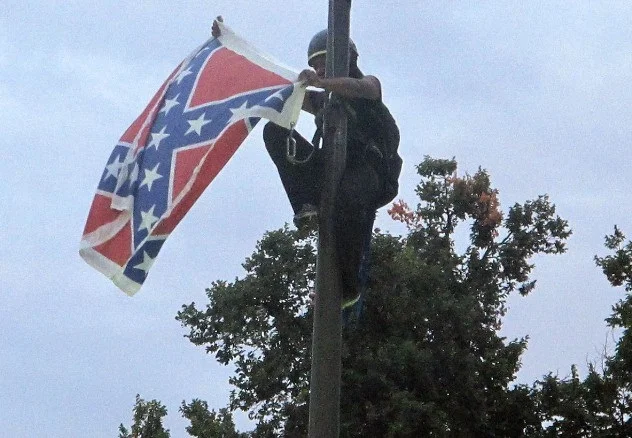
Language and icons are powerful, and flag are among the most pervasive and powerful symbols. We need to confront these symbols, particularly when they are embraced as part of such a high-profile act of violence. However, we cannot let this discussion end there; we cannot practice only activism of convenience. The popularity of the Confederate flag is a symptom of a larger system and we must treat it as such.
The Confederate Flag, White Privilege, and Social Justice

Source: CNN.com
The Confederate battle flag has become increasingly unpopular after the racially motivated shooting in Charleston, South Carolina, which left nine members of the Emanuel African Methodist Episcopal Church dead. The Confederate flag was hardly the only racist symbol the killer embraced, but the flag has become the primary target of public outrage since the attack. As an English major and composition instructor, I am very familiar with the power language and symbols wield. Their power is real and often insidious. Identifying the Confederate battle flag as a symbol of hate and racism is important, and I am appreciative that we are having this conversation, but I believe that in many cases the backlash against the flag has been activism of convenience.
The Confederate flag is certainly cherished by many people, but they constitute a subculture. The majority of Americans and dominant American society have no substantial attachment to the flag, so removing the flag from statehouses or store shelves requires little sacrifice. It is among the least controversial steps a public figure or company could take to combat racism. Again, it is not a meaningless gesture, and some have certainly gone to greater lengths than others to enact change. But this activism of convenience is illustrated well in a quote from Annin Flagmakers: America’s oldest existing manufacturer of flags. As paraphrased in an article on NJ.com, “The Confederate flag represents only a small portion of the company's business.” Some financial and PR risks are likely involved in making such a decision, but most American companies and citizens have very little stake in the future of the Confederate flag.
When we take on social justice issues on the basis of convenience and focus our energies on the lowest stake issues, we can still enact change, but it is less powerful than taking on root causes. There has been no shortage of finger-pointing and social-media activism playing out on online:

A Facebook exchange with the governor of South Carolina (Source)
While posts like this one touch on more uncomfortable truths than taking down flags, laying blame along ideological lines offers another escape from responsibility. I am not speaking in favor of white guilt, self-loathing, or censorship, but I do feel we need to have an honest, critical dialogue that does not end at a flag. I believe there is a productive middle ground between white guilt and avoiding responsibility for systemic oppression in our country, and the overemphasis on the Confederate flag risks distracting us from more meaningful and uncomfortable work.
White supremacy was constructed by white people. It was designed and perpetuated for their benefit. As such, it should be the responsibility of white people to confront it. Even those of us who have never remotely supported any white supremacist organization have at least a responsibility to speak against overtly racist sentiments, particularly when we encounter them directly. However, if you’re like me, you’re unlikely to run into or consort with the blatant, old-fashioned white supremacy perpetuated by people like Dylan Roof, but you may regularly benefit from white privilege, which helps keep systemic oppression both alive and silent.
Dr. Robin DiAngelo uses the term “white fragility” to describe the discomfort and resistance many feel when discussing white privilege (you can find her full article here). Discussing white privilege, particularly when it comes from a person of color, can feel like an attack. After all, I did have to do a lot of hard work to be where I am today, but that doesn’t mean I didn’t have help and advantageous conditions in which to do that work. But this is exactly why our country’s dominant discourse and media should not let this discussion end with how we should react to the Confederate flag. Those in positions of power and privilege – whether politicians, prominent media figures, or those who enjoy more small-scale privilege – are particularly qualified to contribute to meaningful discussion on systemic racism. As a white male, I can make my discussion of these issues less of an attack when I am willing to acknowledge my privilege without discrediting the work I’ve also needed to do throughout my life. As a white male, I get to talk about white privilege in terms of “we”: I’m in this uncomfortable position with you; I know it can feel demeaning to acknowledge our own privilege. But I also know we can be self-critical and take responsibility for the system that supports us without throwing ourselves into a spiral of self-loathing.
Language and icons are powerful, and flags are among the most pervasive and powerful symbols. We need to confront these symbols, particularly when they are embraced as part of such a high-profile act of violence. However, we cannot let this discussion end there; we cannot practice only activism of convenience. The popularity of the Confederate flag is a symptom of a larger system and we must treat it as such. It is our duty to critically examine forces like revisionist history (in its many forms) and the double standard that treats acts committed by white criminals as lone-wolf anomalies while treating criminals of color (or even victims) and indicative of problems that define an entire group of people. These critical discussions will be controversial and uncomfortable, but if we mean to enact change and justice, these inconvenient actions are necessary.
Works Consulted
DiAngelo, Robin. “White Fragility.” International Journal of Critical Pedagogy 3.3 (2011): 54-70. University of North Carolina Greensboro. Web. 4 July 2015.
---. “Why It’s so Hard to Talk to White People About Racism.” Huffington Post, 30 April 2015. Web. 4 July 2015.
Feinberg, Ashley. “White Men Wave Their Butts in the Air for the Confederacy.” Gawker, 30 June 2015. Web. 4 July 2015.
Haley, Nikki. “Facebook post.” Facebook, 17 June 2015. Web. 4 July 2015.
Holley, Peter and DeNeel L. Brown. “Woman Takes Down Confederate Flag in Front of South Carolina Statehouse.” Washington Post, 27 June 2015. Web. 4 July 2015.
Loewen, James W. "Why Do People Believe Myths about the Confederacy? Because Our Textbooks and Monuments are Wrong." Washington Post, 1 July 2015. Web. 4 July 2015.
Marzanec, Pam. "Facebook comment." Facebook, 27 Sept 2014. Web. 4 July 2015.
O’Brien, Kathleen. “N.J. Flagmaker Halts Production of the Confederate Flag.” NJ.com, 23 June 2015. Web. 4 July 2015.
Schmidt, Michael S. “Charleston Suspect Was in Contact with Supremacists, Officials Say.” New York Times, 3 July 2015. Web. 4 July 2015.
Tumulty, Karen and Lyndsey Layton. “Changes in AP History Trigger a Culture Class in Colorado.” Washington Post, 5 October 2014. Web. 4 July 2015.
Wing, Nick. “When the Media Treats White Suspects and Killers Better than Black Victims.” Huffington Post, 14 August 2014. Web. 4 July 2015.
Dominant and Marginalized Media
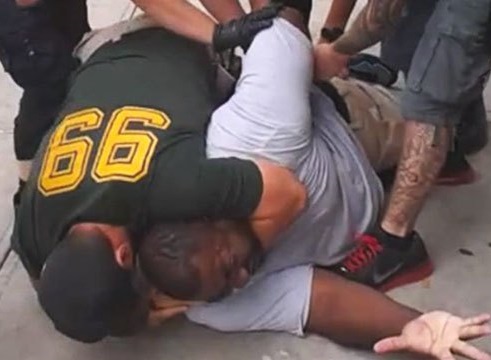
It has been suggested that people like Michael Brown and Eric Garner wouldn’t be dead if they didn’t break the law, which not-so-subtly implies that robbing a store or selling loose cigarettes merit an immediate death penalty. If that is even remotely justified, then choking an unarmed man to death must merit a full trial if we’re going to pretend to have a fair criminal justice system.
Source: Time.com
Jeffery Duncan-Andrade’s “Urban Youth, Media Literacy, and Increased Critical Civic Participation,” a chapter in Beyond Resistance, advocates for media’s potential for supporting “development of critical civic literacy, civic awareness, and civic participation among urban youth.” This project involved students from LA-area schools creating videos about their community as an act of activism to support social change and media literacy. While the research Duncan-Andrade conducted was focused more on media’s power for creative narratives, as opposed to strictly journalistic narratives, I cannot ignore the overwhelming role of media in the recent cases of police killing unarmed black men (or, in one recent case, a 12-year-old).
It hardly needs a source to defend the claim after these last few months, but Duncan-Andrade argues that there is a need for students to create and experience “counternarratives to those of the media, which largely are negative depictions of urban youth and their communities.” We have heard the media emphasizing more than usual the claim that race has ceased to matter in the United States, even frequently calling our culture “post-racial.” That declaration is made, of course, by the same dominant groups who have been in power throughout the history of the United States. The announcement that we’ve become a “post-racial” society does not come from social overhauls or empowerment of marginalized groups; it comes out of a convenient need the dominant groups have to absolve their system of responsibility.
These are clear examples of why counternarratives are necessary, and it is encouraging that technology has enabled more people to effectively be documentary makers than ever before. When surveillance and spectacle dominate the public discourse on crime and punishment (not always in that order), allowing marginalized people to push back against these dominant narratives is crucially important.
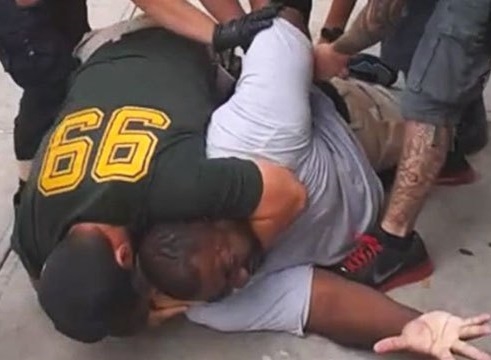
Or so I thought. Months ago, I watched the video of Eric Garner’s murder, and it was so disturbing that I had even convinced myself that some of the cops involved had been slapped with criminal charges not long after the video surfaced. Clearly, that belief was based on nothing but faith that such a glaring breach of trust and police conduct (to put it gently) would result in appropriate investigation and punishment. Then, on December 3rd, it was announced that the grand jury has chosen not to indict the police officer who killed Eric Garner. I admit, I don’t know all the facts. Hard as it is to imagine, maybe what happened to Eric Garner was a tragic accident or somehow merited. I can’t convince myself that is the case, but I have to acknowledge that it’s possible. However, I cannot imagine any version of this situation that would not merit a proper trial; there is an important (and often glossed over) difference between indicted and convicted. It has been suggested that people like Michael Brown and Eric Garner wouldn’t be dead if they didn’t break the law, which not-so-subtly implies that robbing a store or selling loose cigarettes merit an immediate death penalty. If that is even remotely justified, then choking an unarmed man to death must merit a full trial if we’re going to pretend to have a fair criminal justice system.
I wholly endorse the need to broader access to the necessary media for producing counternarratives. Adding ideas like mandatory body cameras for police officers seems to support media’s potential for greater transparency and justice, but media’s power for challenging dominant powers and narratives rings hollow when Eric Garner’s death had just about the best visual documentation we could realistically ask for. If media documentation is not sufficient for pushing back against the murder of an unarmed man, I can’t help but be skeptical of its potential for addressing injustices like inequitable education and systemic poverty.
I can be thankful that these tragic situations have expanded the national conversation on race in America. That conversation has often been more hurtful that helpful, but it is better than willfully perpetuated ignorance of these issues. As much as expanded media empowerment may not solve these injustices, we may not have had such a troubling and critical conversation if the video of Eric Garner’s death hadn’t erased the ambiguities that can complicate these cases. In the words of Miguel, one of the students who participated in Duncan-Andrade’s project, “having the cameras…forced [us] to open our eyes to the inequities that we had not taken notice of before; we effectively became aware citizen.” Change clearly isn’t going to happen tomorrow, but greater awareness today is the necessary first step; we just can’t allow it to be the last.
Works Consulted
Duncan-Andrade, Jeffery. "Urban Youth, Media Literacy, and Increased Critical Civic Participation." Beyond Resistance: Youth Activism and Community Change. Eds. Shawn Ginwright, Pedro Neoguera, and Julio Cammarota. New York: Routledge, 2006. 149-169. Print.
"Lawyer Says Rookie Cleveland Cop Shot, Killed 12-Year-Old." CBSNews.com. CBS Interactive Inc., 24 November 2014. Web. 10 December 2014.
Sanburn, Josh. "Behind the Video of Eric Garner's Deadly Confrontation with New York Police." Time.com. Time Inc., 22 July 2014. Web. 10 December 2014.

Ageism and Erasure in Colorado Curriculum Conflicts
The chairman may disapprove of students being civilly disobedient, but it seems he thinks students would only do so at the command of some outside influence. That attitude demeans students' autonomy by suggesting that they could never have the idea or drive to speak out on matters that affect them. Instead, they must be puppets for some group of adults set on corrupting our youths. "Ageism" is a clunky word, but it seems to fit here; these students' protests are being diminished by the chairman (among others) seemingly based on their age. Give them a few years and Witt may be able to more comfortably write them off as misguided adults, responsible for their own ignorance. Until then, he has to resign himself to writing them off as incapable of having an interest in education and social justice in their own right.

Jefferson Country, not far down the road from Colorado State University, has been experiencing public controversy following the school board's proposal to have a curriculum oversight committee with the ability to make changes to what schools teach. This specifically involves the history curriculum, following new AP history standards. This proposal resulted in public outcry and debate, in Jefferson County and across the country. Backlash against it included a mass "sick out" by teachers which resulted in two high schools closing for the day and protests by students. These student protests were condemned by board chairman Ken Witt:
"It's a shame we see kids on the streets instead of the classrooms...It is never OK to use kids as pawns, and it's what I think is happening here...the union message coming down through the teacher to get kids to deliberately get out and protest something they don't have any facts about whatsoever."
This criticism is made all the more poignant when a central point of contention in the board's proposed curriculum changes is to avoid texts which might encourage "civil disobedience, social strife or disregard for the law" and instead emphasize patriotism and the "positive aspects" of U.S. history.
The chairman may disapprove of students being civilly disobedient, but it seems he thinks students would only do so at the command of some outside influence. That attitude demeans students' autonomy by suggesting that they could never have the idea or drive to speak out on matters that affect them. Instead, they must be puppets for some group of adults set on corrupting our youths. "Ageism" is a clunky word, but it seems to fit here; these students' protests are being diminished by the chairman (among others) seemingly based on their age. Give them a few years and Witt may be able to more comfortably write them off as misguided adults, responsible for their own ignorance. Until then, he has to resign himself to writing them off as incapable of having an interest in education and social justice in their own right.
Beyond Resistance: Youth Activism and Community Change, by Shawn Ginwright, Pedro Noguera, and Julio Cammarota express views very much at odds with the attitude of Witt and those like him. The case studies within Beyond Resistance emphasizes the important role social activism can have in education, particularly for children of color and other marginalized groups. The first chapter of this book charts changes in education in California and the resultant changes in attitudes towards youth, particularly youths of color. In that chapter, Daniel Hosang describes the "antagonistic stance toward youth raised outside the sanctity of white middle- and upper-class life" that rose out of the 1980's. This led to "profiling the growing number of black and brown Californians as both menacing and undeserving." Various approaches have been taken to address the "problem" with these youths, such as emphasizing after-school programs.
In the sixth chapter of Beyond Resistance, by Ben Krishner, he remarks "youth must also have the opportunity to speak up and transform institutions shaping their lives." This chapter focuses on how adults can foster youth activists through apprenticeship systems in which the adult surrenders enough power to properly empower the youth. In other words, this design (as with YPAR) is to avoid the "puppet master" role of adults in the way Ben Witt fears. Instead, it puts faith in youth in believing they can (and want to) make a difference in their communities and the power structures that govern their lives.
Jefferson County is not California in many ways, not the least of which is its racial demographic. The population of Jefferson County is 79.9% white. Although Colorado's struggles may not be identical to California's, this distrust and disempowerment is made all the more troubling in light of the push against materials that might not put white Americans in sufficiently positive light. There is a version of white privilege that has cropped up its head in our education policy: one that opposes teaching about America's mistakes and darker eras. In a county where people of color are a significant minority, such a Eurocentric message may be all the more successful in solidifying white privilege and framing any resistance to that privilege as oppression.
Jefferson County's politics is not an isolated issue in Colorado. Pam Mazanec, a member of the Colorado Board of Education, also criticized the AP changes. In a series of comments on Facebook, Mazanec expresses her concern that the AP standards were designed primarily to promote an "agenda," rather than accurate information (her only cited source is the conservative National Association of Scholars). As an example, she points to white people not being given enough credit for "voluntarily" ending slavery:
"Yes, we practiced slavery. But we also ended it voluntarily, at great sacrifice, while the practice continues in many countries still today!...This is part of the argument that America is exceptional." She also adds, "the concern is that what students need to learn to do well is a negative view of much of our history."
I will say there are plenty of things to celebrate about the United States, but a thorough and accurate understanding of American history should include all Americans, and it often hasn't been a happy story for everyone. People of color and women are just as significant of a part of our history as a bunch of old white men, and America's history with those marginalized groups has quite a few negative things worthy of serious discussion. No one is saying students shouldn't learn about some of the positive, remarkable, and exceptional things that have happened in American history, but we cannot pretend to have an accurate picture of our past or present without recognizing and learning from our mistakes.
Colorado is more fertile of ground for these white-privilege-laden ideologies than I would like to admit as a native-born Coloradoan. In that context, it is all the more encouraging to see students protesting these changes. This sort of youth civil disobedience and activism is exactly what we need in our education system, which is almost exclusively run by adults. At risk of being "ageist" myself, I think there is a problematic disconnect between the ideologies of some members of older generations and the subtlety oppressive reality many youths face. If we mean to erase or downplay the complicated and, yes, often negative history that helped construct these oppressive structures, these marginalized groups will have that much less of a reason to feel they really can be heard or have valid opinions on the issues that affect them.
Above all, we should fight the claim that civil disobedience is somehow separated from patriotism or a functional society. If I had to select the early trait of America I consider to be most exceptional it would be the foresight to include in Article V of the Constitution the ability to add amendments. Any truly just society must be one that understands mistakes will be made and change is necessary. To grow as a society, we will benefit from meaningful discussions of our failings and even from civil disobedience, when necessary. Age should be no reason to discourage civic involvement, and we should not degrade youth activism by assuming they could only be interested in their society against their will. And if they're not interested on their own, we should seriously consider what we may have done to make them think they should not or cannot have an invested interest.
Works Consulted
"2012 Demographic Update." Jefferco.us. Jefferson County, 2012. Web. 15 Oct 2014.
Ginwright, Shawn, Pedro Noguera, and Julio Cammarota. Beyond Resistance: Youth Activism and Community Change. New York: Routledge, 2006. Print.
Gorksi, Eric. "Jeffco school board curriculum committee idea latest divisive issue." Denver Post.com. The Denver Post, 25 Sept 2014. Web. 14 Oct 2014.
Gorski, Eric and Kiernan Nicholson. "Two Jeffco high schools close Friday after teachers absent." Denver Post.com. The Denver Post, 19 Sept 2014. Web. 14 Oct 2014.
Mazanec, Pam. "Facebook comment." Facebook. 27 Sept 2014. Web. 15 Oct 2014.

Pragmatism v. Idealism in Education
While I appreciate being prepared for more than just the bright side, the "real" world I will be entering into after I graduate often seems demoralizing or worse. I'm bound for the world of Senate Bill 191, a world where I can be fired for any reason whatsoever in my first three years, a world ruled by non-experts, a world where the moment by the Common Core reigns (funded and designed largely by people with no classroom teaching experience), and a world that is only a stone's throw from a district whose board seems to think teachers are the primary problem with our education system. In such a world, I can understand the temptation of settling for old fashioned, comfortable answers.

In "Humanizing Research in Dehumanizing Places," a chapter in Humaizning Research, authors Jason G. Irizarry and Tara M. Brown chart several participatory action research (PAR) projects conducted with students in public schools. This sort of research is focused on empowering the student participants by giving them central roles in all phases of the research, from initial proposals to final presentations. These particularly studies also aimed to help students better understand their school system, and how that system can perpetuate disadvantage and segregation for some populations. The authors cite some strong examples of this project being successful for the student participants, such as quoting one student as saying "I never thought anything about...being made to think I'm dumb, that kids like me are dumb....Now I realize I am smart, a researcher, a student. More important, doing that research made me feel like a full person." That is a very powerful response that helps make the case that PAR can be an effective method for engaging and empowering students who may otherwise be failed by our education system.
Of course, these projects were not received as warmly by the teachers of the schools in which the research took place. No small amount of this chapter was spent discussing the conflicts that arose in conducting this research, pedagogically and politically. Following their participation in PAR, the authors note that students "became less willing to be passive recipients of education and demanded more from their teacher...sometimes [critiquing] the practices of their teachers." The authors note that while some teachers and administrators were supportive of this research, "the responses of [many] teachers were often characterized by rancor and suspicion." As a teacher in training, I understand why this reaction from students would be uncomfortable for teachers, but should we really be asking students to be accepting of inferior practices for the sake of our own comfort?
But the issue is more complicated than that. My education as a teacher has been a constant struggle between idealism and pragmatism. There are wonderful, inspiring, and persuasive arguments and philosophies about what education could or should be. The trouble is that's often at odd with what education is. While I appreciate being prepared for more than just the bright side, the "real" world I will be entering into after I graduate often seems demoralizing or worse. I'm bound for the world of Senate Bill 191, a world where I can be fired for any reason whatsoever in my first three years, a world ruled by non-experts, a world reigned over for the moment by the Common Core reigns (funded and designed largely by people with no classroom teaching experience), and a world that is only a stone's throw from a district whose board seems to think teachers are the primary problem with our education system. In such a world, I can understand the temptation of settling for old fashioned, comfortable answers. Policies sure to fail a sizable group of students, such as "teaching to the test," not only begin to sound more reasonable, they sometimes feel like they're all but necessary.
This complacency, this inclination towards easy answers for students, administrators, and politicians, is something that must be resisted. I yearn to implement any number of the exciting, perhaps even revolutionary, ideas I have had the good fortune to learn about through my education. I am just unsure if I will find myself in a climate that wants a teacher who would appreciate approaches like PAR. These concerns are sometimes enough to make me wonder if teaching in this climate is really what I want to do and whether Colorado is the right place for me, even though there's nowhere I would rather be.
Surely I'm in for my share of challenges and shocks as I got into my first year of teaching at the secondary level. For that, I appreciate the education that is preparing me for the good and the bad. I just wish I knew how to even begin balancing the demands of the "real" world and the brilliant philosophies and approaches that remind me why I want to be a teacher. Particularly in an ever-changing political climate surrounding an innately political career, there may be no stable balance. If the school system and its accompanying politics are such a major part of this dilemma, then perhaps methods like PAR are exactly what we need. As uncomfortable as it is, students demanding better from us may help support real, long-term, student-centered change. As is the recent trend with these blog posts, I have far more questions than I have answers, but I can keep trying to be optimistic.
Works Consulted
Colorado Department of Education. "Senate Bill 10-191." Colorado Department of Education, m.d. Web. 2 Oct. 2014.
Gorski, Eric. "Jefferson County Public Schools Faces Crisis Over School Board Changes." Denver Post, 28 Sept. 2014. Web. 2 Oct. 2014.
Irizarry, Jason G. and Tara M. Brown. "Humanizing Research in Dehumanizing Places: The Challenges and Opportunities of Conducting Participatory Action Research with Youth in Schools." Humanizing Research: Decolonizing Qualitative Inquiry with Youth and Communities. Eds. Django Paris and Maisha T. Winn. Los Angeles: Sage Publications, 2014. Print.