
All opinions expressed in Paul's blogs are solely his own. They do not represent the opinions of his employers and/or associates.

Waking Up in Donald Trump's America
Trump’s election shifts more responsibility onto each of us to build the sort of social discourse that will likely be challenged in the years to come....We must hold ourselves and others to a higher standard in our social discourse. We must strive to have even greater empathy, including for those we resent. We have a more exigent obligation to promote and enact social justice....Our future as a sane and functional society may well depend on our ability to enact decency in the face of dissolution.
Anxiety about the Future of Education and Social Discourse

Source: Slate.com
It is under unfortunate circumstances that I break my long radio silence, but writing is an invaluable tool for making sense of trying times.
While we, as educators, have an obligation to not be partisan in our classrooms, it is no secret that, as a private citizen, I have a strong dislike for – even fear of – Donald Trump. My wife is a woman of color. My mother-in-law is a Mexican immigrant and a legal resident, but not a citizen. I have friends and students who are members of the LGBTQ community. I know people whose lives have been significantly improved by having access to abortion services. It’s hard for me to not feel that all of those things are in danger now. Additionally, our social discourse will almost certainly be reshaped during Trump’s presidential term. The die is cast; there’s no going back now. So the question is: how do we move forward from here?
Before I move on, I need to own my privilege. I am a cisgendered, heterosexual, able-bodied, middle-class, white male. I fall into a group that is among those who have the least to fear from Trump. While I feel it is important to acknowledge that my rights are less endangered than the rights of many other people, thinking that that means I don’t have any “skin in the game” is precisely the sort of thinking that has led us to a Donald Trump presidency. Moreover, as someone who is effectively an employee of the federal government, my professional identity cannot be separated from the results of this election. Far, far up the chain of command, Donald Trump will be my boss.
This is a very serious topic, and we are on the brink of very serious consequences, but I hope I can be forgiven for turning to Star Trek in this time of need. In the past, I have said (only half-joking) that when I was growing up, I learned morality by watching Star Trek: The Next Generation. In one episodes, “The Drumhead,” Captain Jean-Luc Picard is among those put on trial during a witch hunt. While he is on the stand, he quotes a fictional judge who said:
“‘With the first link, the chain is forged. The first speech censored, the first thought forbidden, the first freedom denied, chains us all irrevocably.’ Those words were uttered by Judge Aaron Satie, as wisdom and warning. The first time any man’s freedom is trodden on, we’re all damaged.”
I feel there is good reason to be apprehensive, or even afraid, as we look at the years to come. With Trump’s party controlling both chambers of Congress, and with his opportunity to nominate at least one Supreme Court Justice, it would be naïve to think progressive causes won’t be undermined. However, we cannot let this blind us to the need for empathy or trap us in apathy and despair. And I do not mean only empathy for those who may become even more disenfranchised and oppressed. We also have an obligation to be empathetic to those who brought Trump into power. When Trump’s election is being called the “biggest upset in American history,” there is clearly something about the people in this country that we did not understand, or at least underestimated. We do not have the luxury of ignoring them now.
The election results revealed a stark divide between rural and urban voters, not to mention a stark divide in gender and race. It is easy to feel resentment after these results, and to react with hostility or smugness towards Trump’s wave of rural, white men who don’t hold a college degree. But that is not the way forward. In fact, that approach likely has something to do with how we got here. Having empathy towards people with which we profoundly disagree, and towards people who threaten our liberties, is hard, but it is also necessary. We cannot dismiss their grievances, and we cannot deny their political power.
The need for empathy is particularly important for educators, and we are also uniquely positioned to promote social change. I teach in a state that has such an extreme rural/urban divide that eleven of our counties even put forward a ballot initiative to break away from Colorado and become the 51st state. That ostensibly serious effort was motivated specifically by feeling that rural counties were neglected by a state that gave disproportionate attention to our more urban counties. Hillary Clinton ultimately won Colorado, but Trump overwhelmingly won in our rural counties. Many of my students come from families that likely feel they have been left behind in the changing landscape of American and ignored in narratives and economics that privilege cities over towns. I don’t get to pick and choose which students I care about or support. I have an obligation to all of them.
Yet, Trump’s rhetoric and behavior have been validated, and that will surely have a ripple effects. We are likely to see his actions and words replicated (in one way or another) in our classrooms. Virtually every minority group has reason to feel threatened, regardless of what the reality turns out to be. There is a very realistic possibility people of color, women, and members of the LGBTQ community will see their rights curtained. That means we have a heightened obligation to set and hold firm to standards of what is acceptable classroom behavior. The already tenuous and inconsistent nature of classrooms as “safe spaces” will be challenged. At this time, I am troubled by a quote my grad advisor shared from one of her past colleagues: “Is it my job to change the world or just make them more articulate bigots?” It is hard for me to not feel that bigotry has just won.
We can’t let ourselves fall into the trap of apathy or resentment. If I may trot out a clichéd quote from Gandhi, we must instead “be the change [we] wish to see in the world.” As our national social discourse becomes less civil, we must fight to maintain civility in our classrooms. As the notion that we don’t need to respect the needs of others grows, we must build a classroom culture defined by respect. Through careful and challenging work, we can strive to let a these standards spread outwards from our classrooms: into our communities, and beyond, even if our schools become strapped for resources. Perhaps that is overly idealistic, but in difficult times, I will gladly take idealism over fear.
Trump’s election shifts more responsibility onto each of us to build the sort of social discourse that will likely be challenged in the years to come. No blog post of mine would be complete without a Carl Sagan quote, so while Sagan was talking about the fragile nature of the Earth, I believe Trump’s election “underscores our responsibility to deal more kindly with one another.” We must hold ourselves and others to a higher standard in our social discourse. We must strive to have even greater empathy, including for those we resent. We have a more exigent obligation to promote and enact social justice.
However, we must find a way to do so without being smug and without shaming others. We must find a way to pursue these goals that does not alienate the people who have empowered this demagogue. Trump is anything but a unifier, so the onus falls to us to find means of unifying our bruised and fractured society. That goal begins in both our homes and our schools. Our future as a sane and functional society may well depend on our ability to enact decency in the face of dissolution.
For each day I wake up in Trump's America, I will try to remember the words of comedian Justin McElroy from last night:
I'm gonna wake up and keep trying to do good and so are you and nobody gets to vote on that.
— Justin McElroy (@JustinMcElroy) November 9, 2016
Let's keep trying.
Works Consulted
Associated Press. “Gender Gap Proves Crucial: Working-class Men Strengthen Trump’s Bid.” Times Union, 9 Nov. 2016. http://www.timesunion.com/news/article/Gender-gap-proves-crucial-10603292.php Accessed 9 Nov. 2016.
Bouie, Jamelle. “How Trump Happened: It’s Not Just Anger Over Jobs and Immigration. White Voters Hope Trump Will Restore the Racial Hierarchy Upended by Barack Obama.” Slate.com, 13 March 2016. http://www.slate.com/articles/news_and_politics/cover_story/2016/03/how_donald_trump_happened_racism_against_barack_obama.html Accessed 9 Nov. 2016.
"The Drumhead." Star Trek: The Next Generation, written by Jeri Taylor, directed by Jonathan Frakes, CBS, 1991.
Goldberg, Michael. “Discourse.” Washington.edu. https://faculty.washington.edu/mlg/courses/definitions/discourse.html Accessed 9 Nov. 2016.
Goldmacher, Shane and Ben Schreckinger. “Trump Pulls Off Biggest Upset in U.S. History: Markets are Already Reeling After the Billionaire Scores Stunning Win Over Clinton.” Politico.com, 9 Nov. 2016. http://www.politico.com/story/2016/11/election-results-2016-clinton-trump-231070 Accessed 9 Nov. 2016.
Johnson, Pamela. “Thompson Tax Issues Fail: Supporter Shocked, Wonder What Now.” Reporter Herald, 8 Nov. 2016. http://www.reporterherald.com/news/ci_30552262/thompson-tax-issues-fail Accessed 9 Nov. 2016
Pickett, RaeAnn. “Trigger Warnings and Safe Spaces Are Necessary.” Time.com, 31 August 2016. http://time.com/4471806/trigger-warnings-safe-spaces/ Accessed 9 Nov. 2016.
Rensin, Emmett. “The Smug Style in American Liberalism.” Vox.com, 21 April 2016. http://www.vox.com/2016/4/21/11451378/smug-american-liberalism Accessed 9 Nov. 2016.
Sagan, Carl. The Pale Blue Dot: A Vision of the Human Future in Space. New York: Random House, 1994.
Whaley, Monte. “51st State Question Answered ‘No’ in 6 of 11 Counties Contemplating Secession.” The Denver Post, 5 Nov. 2015. http://www.denverpost.com/2013/11/05/51st-state-question-answered-no-in-6-of-11-counties-contemplating-secession/ Accessed 9 Nov. 2016.
Wong, David. “How Half of America Lost its F**king Mind.” Cracked.com, 12 Oct. 2016. http://www.cracked.com/blog/6-reasons-trumps-rise-that-no-one-talks-about/ Accessed 9 Nov. 2016.
Zitner, Aaron and Paul Overberg. “Rural Vote Fuels Trump; Clinton Loses Urban Grip: Division Persists in the Electorate that Have Been in Place for Years.” The Wall Street Journal, 9 Nov. 2016. http://www.wsj.com/articles/rural-vote-helps-donald-trump-as-hillary-clinton-holds-cities-1478664251 Accessed 9 Nov. 2016.

Strange New Worlds
It is troubling to think that students don’t see their skills as transferable from one class to another, but how often do we give students reason to believe otherwise? Our education system long ago drew borders between the disciplines....Students cross a literal, physical threshold as they move between classes. That threshold tells them that when they enter their math class, it is now time for math, and it is no longer time for English. It makes sense, then, that they would dump their English literacy skills at the door.
Bridges Over Perceived Disciplinary Demarcations


This is an adaptation of my M.A. Defense. The video of the original defense presentation is provided at the end of this post.
When I was in seventh grade, I set out to write a science fiction novel. I was convinced that a good science fiction novel needed technology based on plausible science, so I began learning about physics in my free time. Among other results, writing this novel led me to try and understand Einsteinian physics when I was failing a class that asked, at most, for a basic understanding of Newtonian physics. I was grasping at science beyond my grade level (and comprehension), but it was all because of my love of the language arts.
I eventually scrapped that novel, but my love of science fiction still motivated me to learn in my free time. In high school, I continued being a mediocre student; I often worked on my own projects instead of my course work. Starting in 10th grade, I got particularly interested in an esoteric Japanese science fiction cartoon: an anime called Neon Genesis Evangelion. This series has dense (and nearly inaccessible) symbolism, which borrows from a variety of religious and psychological traditions. I ultimately wrote a 26,000 word paper unpacking all the layers of symbolism, and doing so sparked my passion for academic writing.
Wanting to write a novel began my love of learning for its own sake. Analyzing a science fiction anime gave me a passion for literary criticism and academic writing. My lasting goal of writing a science fiction novel persuaded me to enroll in college. Writing my sci-fi novel led me to learn about science and writing the analytical paper led me to learn about psychology and theology.
And yet, all of these connections and passions went all but unused in my undergraduate program. No one – not me, not my peers, and not my instructors – benefited from the exclusion and stagnation of my passions. Most of my undergraduate education in English had to happen in isolation from other disciplines and in isolation from my untraditional passions.
But I don’t really believe that my instructors felt their courses or content exists in isolation from other disciplines. And if you, dear reader, are a teacher, I don’t think you believe your content exists in isolation. In an unusual turn for my blogs, I would like to momentarily make this an interactive discussion. Through a brief activity, I think I can illustrate my point, and its problematic nature.
If you could take out a piece of paper, I’d like you to take just a couple minutes and build a web. In the center of the web, I’d like you to write down your main content area and/or specialization. From there, please take a couple minutes to construct a web of the other disciplines you feel your content area connects to.
It’s okay. I’ll wait.
I’ll bet you thought of quite a few connections. Now I have a follow-up question. You don’t need to draw this new web, but I’d like you to consider: if I asked your students to construct a web like this about your content area, what do you think it would look like? I bet theirs would be more limited, maybe much more limited. Do you agree?
This is not meant to criticize you or your methods. I suspect the problem runs much deeper than that. Research conducted by Linda Bergmann and Janet Zepernick at the University of Missouri of Science and Technology in 2007 suggested that students have great difficulty transferring their literacy and writing skills from one content area to another. In many cases, this seems to be due to an unwillingness to transfer those skills, or maybe more specifically, an inability to see them as transferrable. English courses were seen as particularly isolated, and students felt the writing skills they employed in English were arbitrary and irrelevant to other content areas.
It is troubling to think that students don’t see their skills as transferable from one class to another, but how often do we give students reason to believe otherwise? Our education system long ago drew borders between the disciplines. These borders tell us that science is something separate from English, that social studies are separate from psychology, and so on. By the time students reach college, they have generally dealt with these disciplinary demarcations for at least six years, if not closer to twelve. Students cross a literal, physical threshold as they move between classes. That threshold tells them that when they enter their math class, it is now time for math, and it is no longer time for English. It makes sense, then, that they would dump their English literacy skills at the door.
This even happens within a single content area. I never had the opportunity to take the science fiction course at CSU, but it was offered the same semester I took my advanced creative writing course. That class forbade us from writing science fiction or other “genre” fiction. That means that if I had taken the science fiction course, I would have been expected to leave the content from the science fiction class at the door when I crossed the threshold into my creative writing classroom. My ability to transfer what I learned would have been constrained even within the same department at the same university.
But as I predict your webs illustrate, that’s not how we, as teachers, think about our content areas. The borders between disciplines, like the borders between nations, are only as real as we, collectively, allow them to be. The borders only exist when we believe in and defend them. However, what makes this issue so insidious is that most people probably don’t realize they are defending the disciplinary separation and therefore are unintentionally fighting against transferability. The purpose of my project was to expand transferability and present the different disciplines as an interconnected and overlapping network, rather than divided continents.
In pursuing that goal, I decided to conduct research to explore how sound my reasoning was. The research questions that guided by study were:
- From the perspective of 107 students and 3 of their language arts teachers at a STEM middle school, what texts (books, movies, TV shows, and video games) qualify as science fiction? How do these students and teachers define science fiction? How might this shape their perception of science fiction?
- To what extent is there a positive correlation between students’ enjoyment of science fiction and their interests in STEM classes and careers?
- How popular is science fiction among students? Is science fiction often privileged in the language arts classroom? If not, why not?
- In what ways could science fiction serve as a hook for engaging students in interdisciplinary studies?
Looking at my data, students appear to have broad definitions of science fiction, and it’s usually synonymous with fantasy. More than half read science fiction “for fun,” but they report that teachers rarely or never assign science fiction in class. There is a particularly strong correlation between students’ interest in science and math, and their interests in science fiction movies. This suggests there may be an interdisciplinary connection between science fiction and STEM. These students may already be drawing interdisciplinary connections, as I did at their age. This was only am exploratory study, so it calls for further research. More importantly for this discussion, my project should not end with just revising my research tools, and it should not end with just science fiction.
From the beginning, I envisioned my project as part of a greater whole. When I first pitched it to my advisor, my project was going to involve building a course that employed both science fiction and fantasy to build much broader interdisciplinary connections. That turned out to be unrealistic in scope for both this project and any practical course design. However, that is an idea I would like to return to. All fiction offers valuable opportunities for connecting to other disciplines, and “genre” fiction can form some of the most valuable bridges. So I want my research and my course to be a beginning, not an end. I would like to design more courses in the future that involve using other genres for other kinds of interdisciplinary connections. Or, I would like to inspire others to do similar work.
I believe this kind of interdisciplinary work can better enable and support our students’ passions and better represent what we believe our disciplines to be. We can help transform your students’ hypothetical web into the web you drew. Working to make this shift will enrich both our students’ learning and our own teaching.
This won’t be a quick fix, and it will be particularly challenging in a hierarchical system dominated by state standards and mandates. But I don’t really think I’m asking teachers to embrace any new or alien ideas. Again, I do not think teachers truly believe their disciplines exist in isolation. My goal is to encourage them to take advantage of more avenues for helping students see their skills as transferable. I hope to remind teachers that they are not alone in their missions. And so, I can’t let this project end with me, nor can I let it be dominated by only my voice. While you, dear reader, and I do not represent every discipline, I hope that our conversation today can be one of many beginnings as our respective missions continue.
Note: This is an adapted version of my M.A. Defense, which is provided below.
A video of my defense. I apologize for the poor quality; my recording options were limited.
Ageism and Erasure in Colorado Curriculum Conflicts
The chairman may disapprove of students being civilly disobedient, but it seems he thinks students would only do so at the command of some outside influence. That attitude demeans students' autonomy by suggesting that they could never have the idea or drive to speak out on matters that affect them. Instead, they must be puppets for some group of adults set on corrupting our youths. "Ageism" is a clunky word, but it seems to fit here; these students' protests are being diminished by the chairman (among others) seemingly based on their age. Give them a few years and Witt may be able to more comfortably write them off as misguided adults, responsible for their own ignorance. Until then, he has to resign himself to writing them off as incapable of having an interest in education and social justice in their own right.

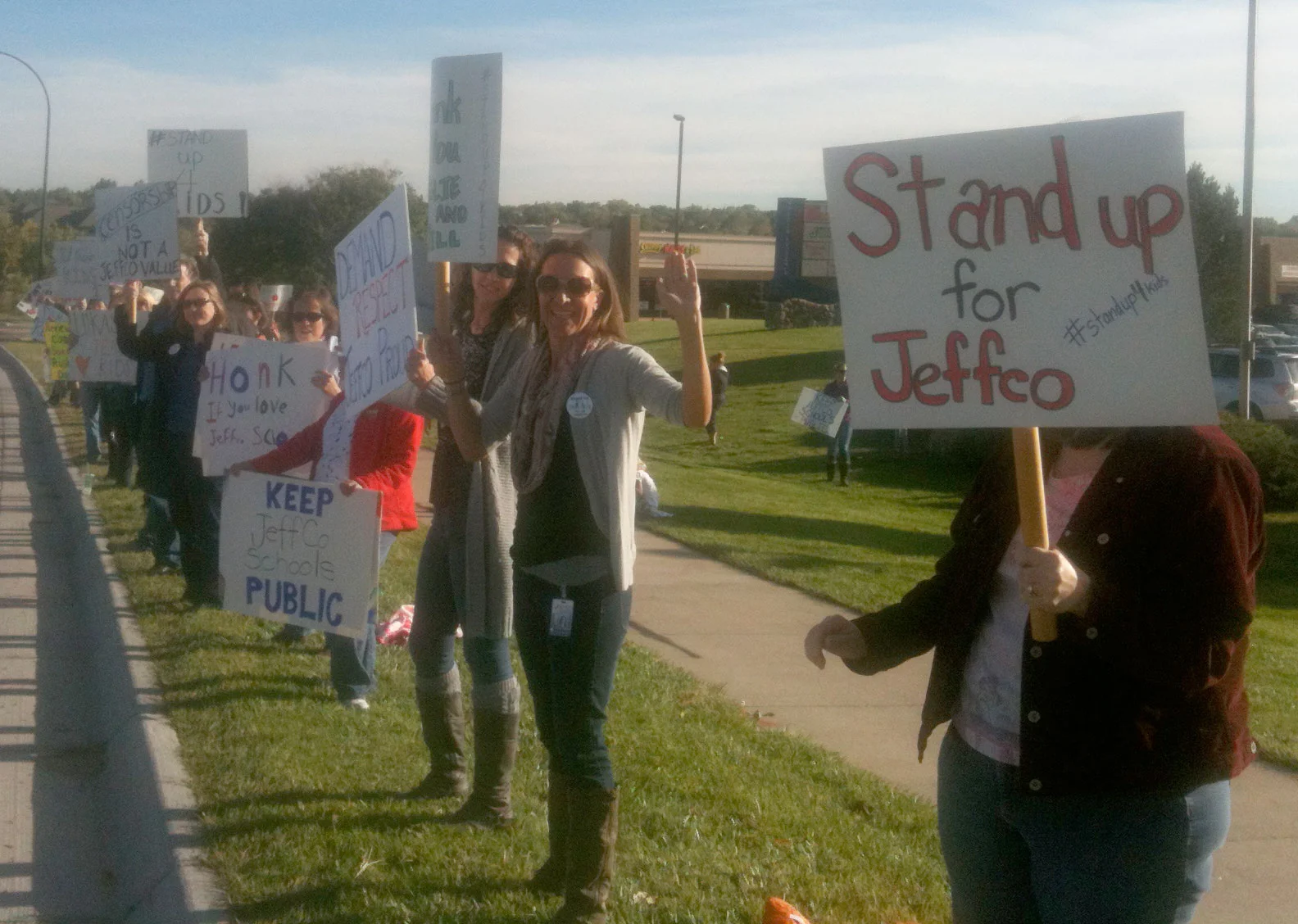
Jefferson Country, not far down the road from Colorado State University, has been experiencing public controversy following the school board's proposal to have a curriculum oversight committee with the ability to make changes to what schools teach. This specifically involves the history curriculum, following new AP history standards. This proposal resulted in public outcry and debate, in Jefferson County and across the country. Backlash against it included a mass "sick out" by teachers which resulted in two high schools closing for the day and protests by students. These student protests were condemned by board chairman Ken Witt:
"It's a shame we see kids on the streets instead of the classrooms...It is never OK to use kids as pawns, and it's what I think is happening here...the union message coming down through the teacher to get kids to deliberately get out and protest something they don't have any facts about whatsoever."
This criticism is made all the more poignant when a central point of contention in the board's proposed curriculum changes is to avoid texts which might encourage "civil disobedience, social strife or disregard for the law" and instead emphasize patriotism and the "positive aspects" of U.S. history.
The chairman may disapprove of students being civilly disobedient, but it seems he thinks students would only do so at the command of some outside influence. That attitude demeans students' autonomy by suggesting that they could never have the idea or drive to speak out on matters that affect them. Instead, they must be puppets for some group of adults set on corrupting our youths. "Ageism" is a clunky word, but it seems to fit here; these students' protests are being diminished by the chairman (among others) seemingly based on their age. Give them a few years and Witt may be able to more comfortably write them off as misguided adults, responsible for their own ignorance. Until then, he has to resign himself to writing them off as incapable of having an interest in education and social justice in their own right.
Beyond Resistance: Youth Activism and Community Change, by Shawn Ginwright, Pedro Noguera, and Julio Cammarota express views very much at odds with the attitude of Witt and those like him. The case studies within Beyond Resistance emphasizes the important role social activism can have in education, particularly for children of color and other marginalized groups. The first chapter of this book charts changes in education in California and the resultant changes in attitudes towards youth, particularly youths of color. In that chapter, Daniel Hosang describes the "antagonistic stance toward youth raised outside the sanctity of white middle- and upper-class life" that rose out of the 1980's. This led to "profiling the growing number of black and brown Californians as both menacing and undeserving." Various approaches have been taken to address the "problem" with these youths, such as emphasizing after-school programs.
In the sixth chapter of Beyond Resistance, by Ben Krishner, he remarks "youth must also have the opportunity to speak up and transform institutions shaping their lives." This chapter focuses on how adults can foster youth activists through apprenticeship systems in which the adult surrenders enough power to properly empower the youth. In other words, this design (as with YPAR) is to avoid the "puppet master" role of adults in the way Ben Witt fears. Instead, it puts faith in youth in believing they can (and want to) make a difference in their communities and the power structures that govern their lives.
Jefferson County is not California in many ways, not the least of which is its racial demographic. The population of Jefferson County is 79.9% white. Although Colorado's struggles may not be identical to California's, this distrust and disempowerment is made all the more troubling in light of the push against materials that might not put white Americans in sufficiently positive light. There is a version of white privilege that has cropped up its head in our education policy: one that opposes teaching about America's mistakes and darker eras. In a county where people of color are a significant minority, such a Eurocentric message may be all the more successful in solidifying white privilege and framing any resistance to that privilege as oppression.
Jefferson County's politics is not an isolated issue in Colorado. Pam Mazanec, a member of the Colorado Board of Education, also criticized the AP changes. In a series of comments on Facebook, Mazanec expresses her concern that the AP standards were designed primarily to promote an "agenda," rather than accurate information (her only cited source is the conservative National Association of Scholars). As an example, she points to white people not being given enough credit for "voluntarily" ending slavery:
"Yes, we practiced slavery. But we also ended it voluntarily, at great sacrifice, while the practice continues in many countries still today!...This is part of the argument that America is exceptional." She also adds, "the concern is that what students need to learn to do well is a negative view of much of our history."
I will say there are plenty of things to celebrate about the United States, but a thorough and accurate understanding of American history should include all Americans, and it often hasn't been a happy story for everyone. People of color and women are just as significant of a part of our history as a bunch of old white men, and America's history with those marginalized groups has quite a few negative things worthy of serious discussion. No one is saying students shouldn't learn about some of the positive, remarkable, and exceptional things that have happened in American history, but we cannot pretend to have an accurate picture of our past or present without recognizing and learning from our mistakes.
Colorado is more fertile of ground for these white-privilege-laden ideologies than I would like to admit as a native-born Coloradoan. In that context, it is all the more encouraging to see students protesting these changes. This sort of youth civil disobedience and activism is exactly what we need in our education system, which is almost exclusively run by adults. At risk of being "ageist" myself, I think there is a problematic disconnect between the ideologies of some members of older generations and the subtlety oppressive reality many youths face. If we mean to erase or downplay the complicated and, yes, often negative history that helped construct these oppressive structures, these marginalized groups will have that much less of a reason to feel they really can be heard or have valid opinions on the issues that affect them.
Above all, we should fight the claim that civil disobedience is somehow separated from patriotism or a functional society. If I had to select the early trait of America I consider to be most exceptional it would be the foresight to include in Article V of the Constitution the ability to add amendments. Any truly just society must be one that understands mistakes will be made and change is necessary. To grow as a society, we will benefit from meaningful discussions of our failings and even from civil disobedience, when necessary. Age should be no reason to discourage civic involvement, and we should not degrade youth activism by assuming they could only be interested in their society against their will. And if they're not interested on their own, we should seriously consider what we may have done to make them think they should not or cannot have an invested interest.
Works Consulted
"2012 Demographic Update." Jefferco.us. Jefferson County, 2012. Web. 15 Oct 2014.
Ginwright, Shawn, Pedro Noguera, and Julio Cammarota. Beyond Resistance: Youth Activism and Community Change. New York: Routledge, 2006. Print.
Gorksi, Eric. "Jeffco school board curriculum committee idea latest divisive issue." Denver Post.com. The Denver Post, 25 Sept 2014. Web. 14 Oct 2014.
Gorski, Eric and Kiernan Nicholson. "Two Jeffco high schools close Friday after teachers absent." Denver Post.com. The Denver Post, 19 Sept 2014. Web. 14 Oct 2014.
Mazanec, Pam. "Facebook comment." Facebook. 27 Sept 2014. Web. 15 Oct 2014.
Pragmatism v. Idealism in Education
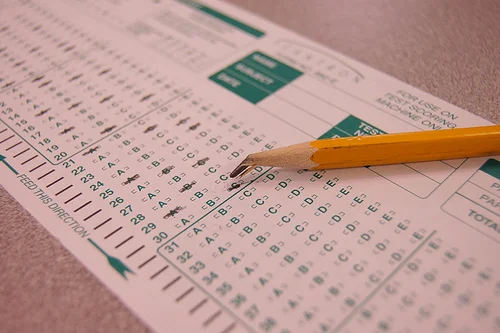
While I appreciate being prepared for more than just the bright side, the "real" world I will be entering into after I graduate often seems demoralizing or worse. I'm bound for the world of Senate Bill 191, a world where I can be fired for any reason whatsoever in my first three years, a world ruled by non-experts, a world where the moment by the Common Core reigns (funded and designed largely by people with no classroom teaching experience), and a world that is only a stone's throw from a district whose board seems to think teachers are the primary problem with our education system. In such a world, I can understand the temptation of settling for old fashioned, comfortable answers.

In "Humanizing Research in Dehumanizing Places," a chapter in Humaizning Research, authors Jason G. Irizarry and Tara M. Brown chart several participatory action research (PAR) projects conducted with students in public schools. This sort of research is focused on empowering the student participants by giving them central roles in all phases of the research, from initial proposals to final presentations. These particularly studies also aimed to help students better understand their school system, and how that system can perpetuate disadvantage and segregation for some populations. The authors cite some strong examples of this project being successful for the student participants, such as quoting one student as saying "I never thought anything about...being made to think I'm dumb, that kids like me are dumb....Now I realize I am smart, a researcher, a student. More important, doing that research made me feel like a full person." That is a very powerful response that helps make the case that PAR can be an effective method for engaging and empowering students who may otherwise be failed by our education system.
Of course, these projects were not received as warmly by the teachers of the schools in which the research took place. No small amount of this chapter was spent discussing the conflicts that arose in conducting this research, pedagogically and politically. Following their participation in PAR, the authors note that students "became less willing to be passive recipients of education and demanded more from their teacher...sometimes [critiquing] the practices of their teachers." The authors note that while some teachers and administrators were supportive of this research, "the responses of [many] teachers were often characterized by rancor and suspicion." As a teacher in training, I understand why this reaction from students would be uncomfortable for teachers, but should we really be asking students to be accepting of inferior practices for the sake of our own comfort?
But the issue is more complicated than that. My education as a teacher has been a constant struggle between idealism and pragmatism. There are wonderful, inspiring, and persuasive arguments and philosophies about what education could or should be. The trouble is that's often at odd with what education is. While I appreciate being prepared for more than just the bright side, the "real" world I will be entering into after I graduate often seems demoralizing or worse. I'm bound for the world of Senate Bill 191, a world where I can be fired for any reason whatsoever in my first three years, a world ruled by non-experts, a world reigned over for the moment by the Common Core reigns (funded and designed largely by people with no classroom teaching experience), and a world that is only a stone's throw from a district whose board seems to think teachers are the primary problem with our education system. In such a world, I can understand the temptation of settling for old fashioned, comfortable answers. Policies sure to fail a sizable group of students, such as "teaching to the test," not only begin to sound more reasonable, they sometimes feel like they're all but necessary.
This complacency, this inclination towards easy answers for students, administrators, and politicians, is something that must be resisted. I yearn to implement any number of the exciting, perhaps even revolutionary, ideas I have had the good fortune to learn about through my education. I am just unsure if I will find myself in a climate that wants a teacher who would appreciate approaches like PAR. These concerns are sometimes enough to make me wonder if teaching in this climate is really what I want to do and whether Colorado is the right place for me, even though there's nowhere I would rather be.
Surely I'm in for my share of challenges and shocks as I got into my first year of teaching at the secondary level. For that, I appreciate the education that is preparing me for the good and the bad. I just wish I knew how to even begin balancing the demands of the "real" world and the brilliant philosophies and approaches that remind me why I want to be a teacher. Particularly in an ever-changing political climate surrounding an innately political career, there may be no stable balance. If the school system and its accompanying politics are such a major part of this dilemma, then perhaps methods like PAR are exactly what we need. As uncomfortable as it is, students demanding better from us may help support real, long-term, student-centered change. As is the recent trend with these blog posts, I have far more questions than I have answers, but I can keep trying to be optimistic.
Works Consulted
Colorado Department of Education. "Senate Bill 10-191." Colorado Department of Education, m.d. Web. 2 Oct. 2014.
Gorski, Eric. "Jefferson County Public Schools Faces Crisis Over School Board Changes." Denver Post, 28 Sept. 2014. Web. 2 Oct. 2014.
Irizarry, Jason G. and Tara M. Brown. "Humanizing Research in Dehumanizing Places: The Challenges and Opportunities of Conducting Participatory Action Research with Youth in Schools." Humanizing Research: Decolonizing Qualitative Inquiry with Youth and Communities. Eds. Django Paris and Maisha T. Winn. Los Angeles: Sage Publications, 2014. Print.

"I Could Be Magical"
"Thinking that I could be magical in some way helped, too. You know, magic is where you make the impossible possible. I think a lot of people in lower income families and in poverty don’t have that as a view; they don’t get to see that any other way. These things that are impossible can’t be possible. I guess it’s just a different way of looking at life."
Young Adult Genre Fiction's Role in Empowerment and Identity

Maria
Young adult literature enjoys widespread popularity. They are often the most successful book in economic terms, the crowning achievement of which is, of course, the Harry Potter series. While it is treated as a second-class form of literature (not appropriate for "adults;" it's right there in the name), it is beloved by many. It can serve as a gateway to more complex literature, and it can entice readers who might not otherwise pick up a book. But if a recent article from Slate.com is any indication, there is still considerable prejudice against these books. The idea that someone should be ashamed of indulging in books in their free time apparently lives on after we all leave high school. How could we forget that reading (at least the wrong thing) is uncool, and that we should strive for acceptance from our peers? If this is how we treat adults who read for pleasure, teens must be all the more troubled, as their English classes and the adult world expect them to put away childish things and move onto "adult" reading. This attitude reinforces the adolescent fear: reading can make you an outcast.
Or is it the other way around? Maybe it is no coincidence that YA fiction is labeled "escapism." Maybe being an outcast can make you a reader.
In the case of Maria, reading was a means of escape. Maria is a 26-year-old woman who is from a traditional Mexican family in Fort Collins, Colorado. Today, she is the first person in her family to go to college, and one of the few that reads for fun. She thinks those two traits are likely connected. Maria has loved reading since the second grade: "I was good at [reading]. I was better at it than anyone in my family. So it became my thing. It still is my thing." She believes that this passion for reading has enabled her to be academically successful today. Her favorite stories to read are young adult fantasy novels, and she traces the roots of this passion all the way back to the first Harry Potter book she read in fifth grade. For her, those books were something special. They weren't just a means of entertainment, they showed her a very special kind of escapism: "other ways of living."
If young adult literature can turn a girl into the only reader in her family, set her on the path to be the first college graduate in her family, and show her "other ways of living," then these books should be highly valued and respected. "Escapism" is often a considered a vice, something for people who lack the will or skills to handle reality. For Maria, young adult books were a means of escape. They were not only an escape from her loneliness as a teenager, they may well have given her a means to escape the cycle of poverty. This escapism should be highly prized, as should the literature that enabled it. To learn more about how reading young adult fiction influenced her life, I sat down with Maria to ask her some questions.
Paul: How would you say you first got hooked on reading?
Maria:
My second grade teacher really helped me learn to love to read. That was one of the things she really helped me with. But my fifth grade teacher really helped me learn how to love fantasy, I guess. He really got me into the genre. He read the first Harry Potter book to us in class. I told him that I had the collection of the C.S. Lewis Chronicles of Narnia series, but I was missing one of them, I was missing the Magician’s Nephew. He asked me if I liked them, and I told him I did enjoy them. The next day, when I came to class, there was a copy of the Magician’s Nephew on my desk.
He really encouraged my reading in that sense. He asked me questions about what I was reading, he was engaged, and, I mean, he gave me a book. He encouraged me in that way. My family wasn’t very affluent. When I got books it was usually from the library or for Christmas. Before that, I read strictly non-fiction and science a little bit. The science we were learning in elementary school was pretty basic. I remember liking to read about space and the forest. I really liked the forests. And then with my fifth grade teacher, he really helped me with knowing I could like things other than reading about normal or real things.
Paul: You emphasize the importance of fantasy. Do you think that genre was more successful at turning you into a reader than, say, realism would have been?
Maria (audio recording provided above):
Definitely. I feel like Harry Potter has a lot of strong female characters, and that was something I was lacking in my life. I may not have been very openly saying "I’m totally a wizard" or those type of things, but seeing a character like reading as much as I did really helped. Like Matilda, who I really related to because she also liked to read a lot and she was also magical. So I guess thinking that I could be magical in some way helped, too. You know, magic is where you make the impossible possible. I think a lot of people in lower income families and in poverty don’t have that as a view; they don’t get to see that any other way. These things that are impossible can’t be possible. I guess it’s just a different way of looking at life.
For me personally, I like to read for enjoyment, so I read stories with happy endings, which I know is not at all realistic. But like I said, I was surrounded by misery. The last things I wanted to read about was someone having an okay life and having something work out for them, only to have it ripped away from them in the end. Many realistic stories, that I’ve read anyway, have always ended up with misery. For me, I don’t think realistic stories would have been effective at all. It would have just reinforced what I was seeing, and therefore I would have been like: "there’s no point. I can’t fight this. Everyone struggles. There’s no point in fighting what I’m seeing now because even the books tell me that this is it; this is how shitty life can be."
Maria (recording above):
I grew up in a very poor town, too. My family was very poor all the time. So what I saw more often than not was the women dropping out of high school and having children before they were 20 years old. I think everyone in my family has had a child before they were 23. And that goes for male and female. That’s what I expected. I kind of expected I would end up getting married, having three or four kids, and I was even expecting to be married to a man I may not even like. There was a lot of unhappiness that was surrounding me.
In Harry Potter, particularly with Hermione, really showed me that I could be smart and I could go places. That I could do things and I was capable of being something more than just a wife or a mother. Not that those are bad things, but in my family it seemed more of a prison for my family, that these women were being just wives and just mothers. It wasn’t anything redeeming; quality of life for them wasn’t that great and I didn’t want that. And that’s where Harry Potter encouraged me to imagine myself in these different roles, imagine myself in these different times, which encouraged me to look for different options.
Paul: There is criticism of young adult literature out there that it features primarily white, middle class characters. Was that ever an issue for you? Did that make it any harder for you to have that escape or to associate yourself with those characters?
Maria:
No, I don’t think so. I honestly can’t say that it would have made a difference. If it was the same story - the story of the kid who lived under the stairs who lost his parents and had these awesome friends - his race wouldn’t have mattered. I can’t recalls ever being upset that Hermione was white instead of black, or that none of them were ever Hispanic. That really didn’t bother me at all, because it was my story, my journey. I also just didn’t care about race. It was something that I either subconsciously tried to avoid as much as possible, or it’s something I didn’t care about. Whereas some people it could be a factor, like my family really cared about what color of friends I had. I didn’t care.
I would make up scenarios in my head. I often pretended I was a witch or a wizard in Harry Potter, specifically in Harry Potter as myself, not has Harry or Hermione. It was always me in their world somehow. It didn’t even matter. I could still be with my family, but I was still a special person in that world. It was so easy to see myself as someone else or see myself in a role I wouldn’t otherwise be able to be in.
Maybe race didn't matter because I was already ostracized in my own family, in my own culture. I felt like I wasn’t really part of the culture. Maybe that had a factor in how I saw these character? Race didn’t matter, because apparently to me it was just another person. My biggest bullies were my family. They made me feel like more of an outsider than race in these books did.
Paul: Your sisters would have gone through many of the same situations as you did. Why do you think they didn't end up being as much of readers as you are?
Maria:
We had different teachers, and we went to different schools. We went to the same
elementary school, but we went to different junior highs and high schools. I went to CLP (Cache La Poudre Junior High) and both my sisters went to Lincoln Junior High. I went to Rocky and they went to Poudre and Fort Collins High School.
And we had different friends. That probably had the biggest influence. The friends I had in high school and junior high read the same books I did, so we were able to read them and discuss them and just talk about these characters and stories. My sister had their gangster friends, their cholo friends, they were always being threatened or getting into fights. They were doing the expected things of a teenager, and I was doing the atypical thing for a teenager. I may not have been a good student in high school, but other than that I was diligent and I followed the rules more often than not.
I think they were happy with where they were at and who they were, and I wasn’t. I think that’s the biggest influence with why I read so much. I needed to see the different options, I needed that escape, I needed that different reality and to portray that different role, even if it was just through reading. So they were content with where they were at and who they were and what they were expected to do. I think that was the biggest difference.
Paul: If race wasn't really a problem for you and your imaginings, do you still think it is a problem that should be address, or should be changed, in young adult literature?
Maria:
It does really suck that the only books where the characters are non-white are realistic situations, like where a family member is a gang member and being prosecuted, or a family in poverty who is just trying to get out ahead. I think it’s a very self-fulfilling prophecy. They’re not only told they’re hopeless from the rest of the world outside of them, they’re also being told they’re hopeless by the characters they’re reading about. I feel like a lot of students who do read for pleasure do it because they are trying to get away. It’s not just because they feel like reading. It’s because they need somewhere to go to that’s different from where they’re at. So, I do believe there is a need to have these different options, to have more non-white characters in the lead that are in the more magical or more powerful situations, where it’s not so hopeless.
Those are the only options we have: be hopeless or be alienated from our culture. Recently with the Coke commercial, people were singing "American the Beautiful" in different languages and celebrating American culture, and people were getting mad about that, even in my classes now. The girl next to me said "They’re in America, they should learn English." I just said "I think it was a really powerful commercial. It made me feel proud to be American and Mexican." I think we need those kind of things, to make us feel proud of our dual identities. We shouldn’t have to be just one or the other. Like Part-Time Indian: he had to really struggle with his dual identity. And he, in the end, didn't really choose his tribe. He had to kind of choose the white people. That's because he was in a situation where if he chose both to be proud of, neither was going to accept him. He couldn't be both an American and a Native American. I feel like a lot of people are in that position; they can’t just be both American and Puerto Rican, even though it’s a U.S. territory. They have to be just American or just Puerto Rican. It sucks. I think we should encourage more dual and multiple identities. In the end, it’s impossible to have just one identity.
Paul: Wouldn't it be nice if that was coming from someone beside a company that's just trying to sell you a drink?
Maria:
How the message gets out there doesn’t matter; it’s the message that’s important. I didn’t see it as a Coke thing, I saw it as an American thing. This is how we should all feel. This is how we should all be. This is what American should be.
Maria's story certainly hasn't always been been a happy one, but for who she is today the value of reading cannot be overlooked. While race may not have stopped her from escaping into books, she had to step beyond realism to find hope. I don't think we can say that need solely arises from the limited representation of people of color in young adult literature, but when her choices are so limited and when "realistic" stories about people of color surround almost exclusively sports, poverty, and gangs, then a reader is left with few options.
People like the author of the Slate article also criticize YA fiction for the unrealistically happy endings, but if we can't make the case to students that reading can be enjoyable, we will have little hope of keeping them reading. More importantly, people like Maria can find comfort and hope in stories that have happy endings. Literature has an incredible power to take on complex and morally ambiguous issues in an engaging way, but giving pleasure, hope, and "other ways of living" to people stuck in unhappy situations is at least as valuable. What is truly embarrassing is to tell those people that they can only have a happy ending in something that is unrealistic. But if we only allow happy endings to exist in fantasy, we should encourage students to seek out these stories and enjoy them. We should strive to remove limitations from students' imaginations and enable them to really see all the possible ways of living by populating stories with more diverse characters or by supporting the reading of genre fiction. These stories can truly make the impossible seem possible, and let all of these students know what it's like to be at least a little bit magical.