
All opinions expressed in Paul's blogs are solely his own. They do not represent the opinions of his employers and/or associates.
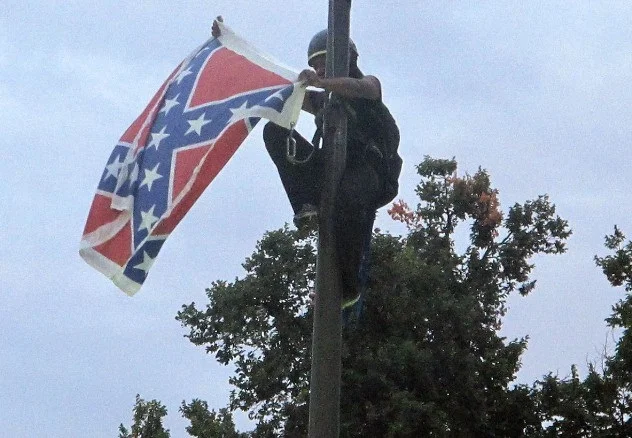
Activism of Convenience
Language and icons are powerful, and flag are among the most pervasive and powerful symbols. We need to confront these symbols, particularly when they are embraced as part of such a high-profile act of violence. However, we cannot let this discussion end there; we cannot practice only activism of convenience. The popularity of the Confederate flag is a symptom of a larger system and we must treat it as such.
The Confederate Flag, White Privilege, and Social Justice

Source: CNN.com
The Confederate battle flag has become increasingly unpopular after the racially motivated shooting in Charleston, South Carolina, which left nine members of the Emanuel African Methodist Episcopal Church dead. The Confederate flag was hardly the only racist symbol the killer embraced, but the flag has become the primary target of public outrage since the attack. As an English major and composition instructor, I am very familiar with the power language and symbols wield. Their power is real and often insidious. Identifying the Confederate battle flag as a symbol of hate and racism is important, and I am appreciative that we are having this conversation, but I believe that in many cases the backlash against the flag has been activism of convenience.
The Confederate flag is certainly cherished by many people, but they constitute a subculture. The majority of Americans and dominant American society have no substantial attachment to the flag, so removing the flag from statehouses or store shelves requires little sacrifice. It is among the least controversial steps a public figure or company could take to combat racism. Again, it is not a meaningless gesture, and some have certainly gone to greater lengths than others to enact change. But this activism of convenience is illustrated well in a quote from Annin Flagmakers: America’s oldest existing manufacturer of flags. As paraphrased in an article on NJ.com, “The Confederate flag represents only a small portion of the company's business.” Some financial and PR risks are likely involved in making such a decision, but most American companies and citizens have very little stake in the future of the Confederate flag.
When we take on social justice issues on the basis of convenience and focus our energies on the lowest stake issues, we can still enact change, but it is less powerful than taking on root causes. There has been no shortage of finger-pointing and social-media activism playing out on online:

A Facebook exchange with the governor of South Carolina (Source)
While posts like this one touch on more uncomfortable truths than taking down flags, laying blame along ideological lines offers another escape from responsibility. I am not speaking in favor of white guilt, self-loathing, or censorship, but I do feel we need to have an honest, critical dialogue that does not end at a flag. I believe there is a productive middle ground between white guilt and avoiding responsibility for systemic oppression in our country, and the overemphasis on the Confederate flag risks distracting us from more meaningful and uncomfortable work.
White supremacy was constructed by white people. It was designed and perpetuated for their benefit. As such, it should be the responsibility of white people to confront it. Even those of us who have never remotely supported any white supremacist organization have at least a responsibility to speak against overtly racist sentiments, particularly when we encounter them directly. However, if you’re like me, you’re unlikely to run into or consort with the blatant, old-fashioned white supremacy perpetuated by people like Dylan Roof, but you may regularly benefit from white privilege, which helps keep systemic oppression both alive and silent.
Dr. Robin DiAngelo uses the term “white fragility” to describe the discomfort and resistance many feel when discussing white privilege (you can find her full article here). Discussing white privilege, particularly when it comes from a person of color, can feel like an attack. After all, I did have to do a lot of hard work to be where I am today, but that doesn’t mean I didn’t have help and advantageous conditions in which to do that work. But this is exactly why our country’s dominant discourse and media should not let this discussion end with how we should react to the Confederate flag. Those in positions of power and privilege – whether politicians, prominent media figures, or those who enjoy more small-scale privilege – are particularly qualified to contribute to meaningful discussion on systemic racism. As a white male, I can make my discussion of these issues less of an attack when I am willing to acknowledge my privilege without discrediting the work I’ve also needed to do throughout my life. As a white male, I get to talk about white privilege in terms of “we”: I’m in this uncomfortable position with you; I know it can feel demeaning to acknowledge our own privilege. But I also know we can be self-critical and take responsibility for the system that supports us without throwing ourselves into a spiral of self-loathing.
Language and icons are powerful, and flags are among the most pervasive and powerful symbols. We need to confront these symbols, particularly when they are embraced as part of such a high-profile act of violence. However, we cannot let this discussion end there; we cannot practice only activism of convenience. The popularity of the Confederate flag is a symptom of a larger system and we must treat it as such. It is our duty to critically examine forces like revisionist history (in its many forms) and the double standard that treats acts committed by white criminals as lone-wolf anomalies while treating criminals of color (or even victims) and indicative of problems that define an entire group of people. These critical discussions will be controversial and uncomfortable, but if we mean to enact change and justice, these inconvenient actions are necessary.
Works Consulted
DiAngelo, Robin. “White Fragility.” International Journal of Critical Pedagogy 3.3 (2011): 54-70. University of North Carolina Greensboro. Web. 4 July 2015.
---. “Why It’s so Hard to Talk to White People About Racism.” Huffington Post, 30 April 2015. Web. 4 July 2015.
Feinberg, Ashley. “White Men Wave Their Butts in the Air for the Confederacy.” Gawker, 30 June 2015. Web. 4 July 2015.
Haley, Nikki. “Facebook post.” Facebook, 17 June 2015. Web. 4 July 2015.
Holley, Peter and DeNeel L. Brown. “Woman Takes Down Confederate Flag in Front of South Carolina Statehouse.” Washington Post, 27 June 2015. Web. 4 July 2015.
Loewen, James W. "Why Do People Believe Myths about the Confederacy? Because Our Textbooks and Monuments are Wrong." Washington Post, 1 July 2015. Web. 4 July 2015.
Marzanec, Pam. "Facebook comment." Facebook, 27 Sept 2014. Web. 4 July 2015.
O’Brien, Kathleen. “N.J. Flagmaker Halts Production of the Confederate Flag.” NJ.com, 23 June 2015. Web. 4 July 2015.
Schmidt, Michael S. “Charleston Suspect Was in Contact with Supremacists, Officials Say.” New York Times, 3 July 2015. Web. 4 July 2015.
Tumulty, Karen and Lyndsey Layton. “Changes in AP History Trigger a Culture Class in Colorado.” Washington Post, 5 October 2014. Web. 4 July 2015.
Wing, Nick. “When the Media Treats White Suspects and Killers Better than Black Victims.” Huffington Post, 14 August 2014. Web. 4 July 2015.
Dominant and Marginalized Media
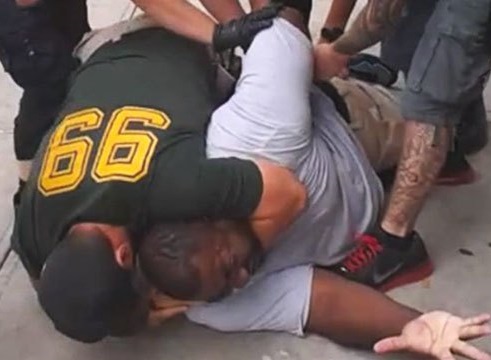
It has been suggested that people like Michael Brown and Eric Garner wouldn’t be dead if they didn’t break the law, which not-so-subtly implies that robbing a store or selling loose cigarettes merit an immediate death penalty. If that is even remotely justified, then choking an unarmed man to death must merit a full trial if we’re going to pretend to have a fair criminal justice system.
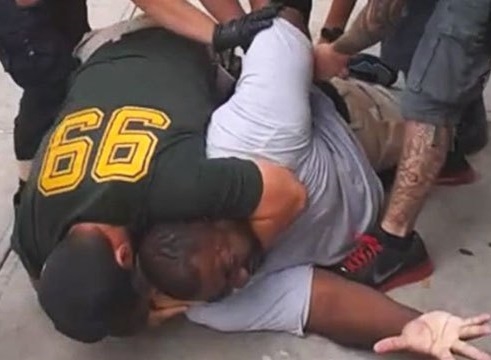
Source: Time.com
Jeffery Duncan-Andrade’s “Urban Youth, Media Literacy, and Increased Critical Civic Participation,” a chapter in Beyond Resistance, advocates for media’s potential for supporting “development of critical civic literacy, civic awareness, and civic participation among urban youth.” This project involved students from LA-area schools creating videos about their community as an act of activism to support social change and media literacy. While the research Duncan-Andrade conducted was focused more on media’s power for creative narratives, as opposed to strictly journalistic narratives, I cannot ignore the overwhelming role of media in the recent cases of police killing unarmed black men (or, in one recent case, a 12-year-old).
It hardly needs a source to defend the claim after these last few months, but Duncan-Andrade argues that there is a need for students to create and experience “counternarratives to those of the media, which largely are negative depictions of urban youth and their communities.” We have heard the media emphasizing more than usual the claim that race has ceased to matter in the United States, even frequently calling our culture “post-racial.” That declaration is made, of course, by the same dominant groups who have been in power throughout the history of the United States. The announcement that we’ve become a “post-racial” society does not come from social overhauls or empowerment of marginalized groups; it comes out of a convenient need the dominant groups have to absolve their system of responsibility.
These are clear examples of why counternarratives are necessary, and it is encouraging that technology has enabled more people to effectively be documentary makers than ever before. When surveillance and spectacle dominate the public discourse on crime and punishment (not always in that order), allowing marginalized people to push back against these dominant narratives is crucially important.
Or so I thought. Months ago, I watched the video of Eric Garner’s murder, and it was so disturbing that I had even convinced myself that some of the cops involved had been slapped with criminal charges not long after the video surfaced. Clearly, that belief was based on nothing but faith that such a glaring breach of trust and police conduct (to put it gently) would result in appropriate investigation and punishment. Then, on December 3rd, it was announced that the grand jury has chosen not to indict the police officer who killed Eric Garner. I admit, I don’t know all the facts. Hard as it is to imagine, maybe what happened to Eric Garner was a tragic accident or somehow merited. I can’t convince myself that is the case, but I have to acknowledge that it’s possible. However, I cannot imagine any version of this situation that would not merit a proper trial; there is an important (and often glossed over) difference between indicted and convicted. It has been suggested that people like Michael Brown and Eric Garner wouldn’t be dead if they didn’t break the law, which not-so-subtly implies that robbing a store or selling loose cigarettes merit an immediate death penalty. If that is even remotely justified, then choking an unarmed man to death must merit a full trial if we’re going to pretend to have a fair criminal justice system.
I wholly endorse the need to broader access to the necessary media for producing counternarratives. Adding ideas like mandatory body cameras for police officers seems to support media’s potential for greater transparency and justice, but media’s power for challenging dominant powers and narratives rings hollow when Eric Garner’s death had just about the best visual documentation we could realistically ask for. If media documentation is not sufficient for pushing back against the murder of an unarmed man, I can’t help but be skeptical of its potential for addressing injustices like inequitable education and systemic poverty.
I can be thankful that these tragic situations have expanded the national conversation on race in America. That conversation has often been more hurtful that helpful, but it is better than willfully perpetuated ignorance of these issues. As much as expanded media empowerment may not solve these injustices, we may not have had such a troubling and critical conversation if the video of Eric Garner’s death hadn’t erased the ambiguities that can complicate these cases. In the words of Miguel, one of the students who participated in Duncan-Andrade’s project, “having the cameras…forced [us] to open our eyes to the inequities that we had not taken notice of before; we effectively became aware citizen.” Change clearly isn’t going to happen tomorrow, but greater awareness today is the necessary first step; we just can’t allow it to be the last.
Works Consulted
Duncan-Andrade, Jeffery. "Urban Youth, Media Literacy, and Increased Critical Civic Participation." Beyond Resistance: Youth Activism and Community Change. Eds. Shawn Ginwright, Pedro Neoguera, and Julio Cammarota. New York: Routledge, 2006. 149-169. Print.
"Lawyer Says Rookie Cleveland Cop Shot, Killed 12-Year-Old." CBSNews.com. CBS Interactive Inc., 24 November 2014. Web. 10 December 2014.
Sanburn, Josh. "Behind the Video of Eric Garner's Deadly Confrontation with New York Police." Time.com. Time Inc., 22 July 2014. Web. 10 December 2014.